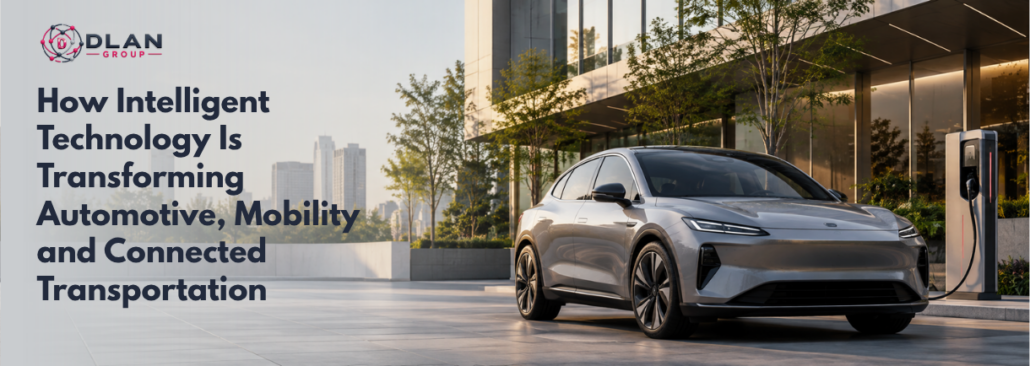
How Intelligent Technology Is Transforming Automotive & Mobility
Transportation is entering a new digital era.
Vehicles are becoming more connected. Customers expect more convenient travel experiences. Businesses are using data to improve operations, while cloud technology and artificial intelligence are creating new opportunities across the automotive and mobility industries.
This shift is changing the way businesses think about transportation.
Mobility is no longer only about moving people from one place to another.
It is increasingly about connectivity, data, technology, security, customer experience, and intelligent operations.
This is where intelligent mobility comes into focus.
Intelligent mobility uses digital technologies to improve how people, vehicles, businesses, and transportation systems interact.
From connected vehicles and telecom networks to cloud platforms, cybersecurity, analytics, AI, chauffeur services, and automotive solutions, multiple technologies can work together to create a more connected transportation ecosystem.
DLAN Group brings together technology, mobility, security, automotive services, and digital innovation within its broader business ecosystem.
What Is Intelligent Mobility?
Intelligent mobility refers to the use of technology, connectivity, data, and intelligent systems to improve transportation.
It can involve:
- Connected vehicles
- Digital mobility services
- Fleet management
- Telecom connectivity
- Cloud platforms
- Data analytics
- Artificial intelligence
- Cybersecurity
- Digital customer experiences
The purpose is not simply to make transportation more complicated.
The goal is to make it more efficient, reliable, secure, and convenient.
Why Connectivity Is Important for Modern Transportation
Connectivity is becoming one of the foundations of modern mobility.
Vehicles, businesses, customers, applications, and service providers may all need to exchange information.
For example, a mobility company may need to communicate with customers while also managing vehicles, bookings, employees, and operational data.
Reliable connectivity supports these interactions.
DLAN Group provides Telecom Services designed to provide enterprise-grade connectivity and seamless communication.
As transportation becomes more digital, reliable communication infrastructure will become increasingly important.
Connected Vehicles Are Changing the Automotive Industry
The modern vehicle is becoming more than a physical machine.
Digital systems are increasingly becoming part of the driving and ownership experience.
Drivers may use connected navigation, digital entertainment, mobile applications, safety technologies, and other connected features.
Businesses can also use vehicle-related information to improve operations.
Connected automotive technology can support:
- Vehicle monitoring
- Customer services
- Fleet operations
- Maintenance planning
- Navigation
- Communication
- Performance analysis
DLAN Group includes Automotive Solutions within its service portfolio, with solutions focused on efficiency and performance.
Data Is Becoming a Major Mobility Asset
Connected vehicles and mobility services can generate large amounts of information.
This data can help businesses understand how their operations are performing.
For example, transportation companies may analyze:
- Vehicle usage
- Customer demand
- Travel patterns
- Route performance
- Operational costs
- Service activity
- Maintenance requirements
The value comes from turning this information into useful insights.
Data analytics can help businesses identify patterns that may not be visible through manual processes.
This can support better planning and more informed decision-making.
Cloud Technology Supports Connected Transportation
Connected transportation requires systems that can manage information across multiple locations.
Cloud technology can provide scalable infrastructure for applications, data, and digital services.
For example, a business operating vehicles across several cities may need centralized systems for managing information.
Cloud platforms can help organizations access and manage digital resources without depending entirely on physical infrastructure.
However, cloud adoption should be carefully planned.
Businesses need to consider security, performance, access, integration, and scalability.
DLAN Group’s Cloud Solutions are positioned around flexibility, accessibility, performance, and business growth.
Cybersecurity Is Essential for Connected Mobility
Connectivity creates opportunities, but it also creates security requirements.
When vehicles, applications, networks, and cloud platforms become connected, organizations need to think carefully about how information and systems are protected.
Cybersecurity may need to cover:
- Connected devices
- Networks
- Applications
- Cloud platforms
- Customer data
- Business systems
- User access
A weakness in one part of a connected environment can potentially create risks elsewhere.
This is why cybersecurity should be considered from the beginning of any intelligent mobility strategy.
DLAN Group identifies Cybersecurity as a core service, focusing on protection for digital infrastructure, networks, users, and business data.
AI Can Make Transportation More Intelligent
Artificial intelligence is creating new opportunities across mobility and automotive operations.
AI can process large amounts of information and identify patterns that may be difficult to detect manually.
Potential applications include:
- Demand forecasting
- Route optimization
- Customer support
- Predictive maintenance
- Operational analysis
- Automation
- Intelligent recommendations
AI can therefore support both business operations and customer experiences.
DLAN Group’s digital ecosystem includes DLAN AI, which focuses on AI, automation, and digital innovation.
The wider potential of AI in mobility will depend on reliable data, secure infrastructure, and responsible implementation.
Predictive Maintenance Can Improve Vehicle Operations
Vehicle maintenance has traditionally depended heavily on schedules and manual inspections.
Connected technology can create opportunities for a more proactive approach.
By analyzing vehicle information, businesses may be able to identify signs of potential problems before they cause major disruption.
Predictive maintenance can help organizations plan maintenance more effectively and potentially reduce unexpected downtime.
For fleet operators, vehicle availability can have a direct impact on business performance.
The combination of connected vehicles, analytics, cloud technology, and AI can therefore support a more intelligent maintenance strategy.
Mobility Is Also About Customer Experience
Technology should not only improve internal operations.
It should also improve the experience of customers.
People increasingly expect transportation services to be:
- Easy to book
- Reliable
- Comfortable
- Responsive
- Secure
- Convenient
Digital communication can provide updates. Online platforms can simplify booking. Data can help businesses understand customer preferences.
These improvements can make the entire transportation journey smoother.
Premium Mobility Requires More Than a Vehicle
A premium transportation service is not defined only by the vehicle being used.
The complete experience matters.
Customers may value:
- Professional drivers
- Reliability
- Comfort
- Communication
- Timely service
- Easy booking
- Consistent quality
DLAN Group also provides Chauffeur Services focused on professional transportation, comfort, and reliability.
This shows how mobility can combine physical transportation with digital business systems.
IT Consulting Can Support Mobility Transformation
Technology investments can become complicated when businesses introduce multiple digital systems.
A transportation company may have separate platforms for:
- Customers
- Vehicles
- Bookings
- Communication
- Payments
- Analytics
- Reporting
If these systems do not communicate effectively, employees may need to perform manual tasks.
This can reduce efficiency and increase the risk of errors.
IT consulting can help businesses assess their existing technology environment and create a more coordinated strategy.
DLAN Group provides IT Consulting focused on strategic technology guidance and business operations.
The goal should be to create technology that supports mobility operations instead of creating additional complexity.
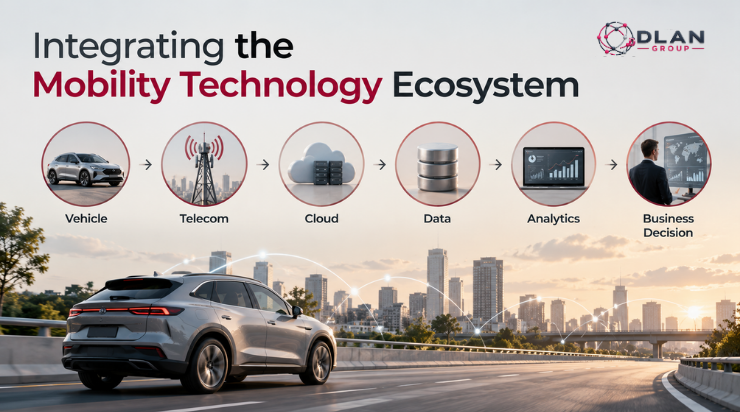
Integrating the Mobility Technology Ecosystem
The future of mobility will depend heavily on integration.
Consider a simplified connected mobility ecosystem:
Vehicle → Telecom → Cloud → Data → Analytics → Business Decision
Cybersecurity protects the entire chain.
AI can analyze the information.
IT consulting helps determine how the components should work together.
This demonstrates why intelligent mobility is not one technology.
It is a combination of technologies working together.
The Role of Telecom in Connected Transportation
It is easy to focus on visible technology such as vehicles and mobile applications.
But behind many connected mobility services is a communication network.
Vehicles and systems need to exchange information.
Businesses need reliable communication.
Customers need updates.
Employees need access to operational platforms.
Telecom therefore forms an important foundation for connected transportation.
As connected mobility expands, organizations will need to consider both connectivity performance and security.
Data Analytics Can Improve Transportation Decisions
Transportation businesses often make decisions based on experience.
Experience remains valuable, but data can provide another layer of insight.
Analytics can help organizations understand what is actually happening across their operations.
For example, data could show:
- Which services are most popular
- When demand increases
- Which routes create delays
- Where resources are underused
- Which vehicles require attention
- How customer behavior changes
These insights can support more informed planning.
They can also help businesses measure whether technology investments are delivering practical results.
Mobility and Business Efficiency
Intelligent mobility should ultimately create business value.
Better information can help organizations use resources more effectively.
Better connectivity can reduce communication gaps.
Cloud systems can provide greater flexibility.
Analytics can improve decision-making.
AI can support automation.
Cybersecurity can help protect the digital environment.
When these technologies work together, mobility businesses can create more efficient operations.
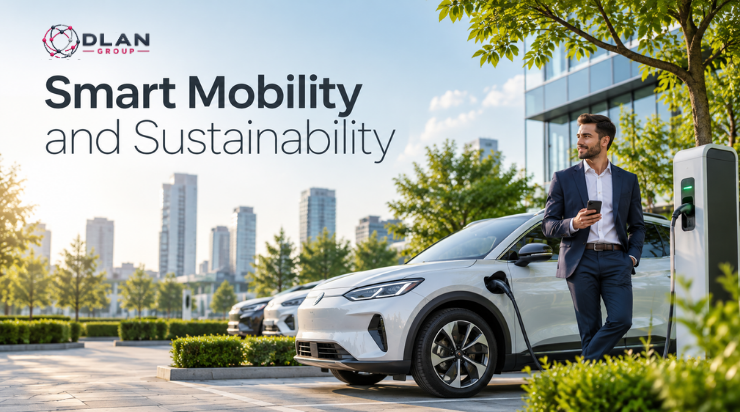
Smart Mobility and Sustainability
Technology can also support more efficient use of transportation resources.
Better route planning may reduce unnecessary travel.
Improved vehicle utilization can help businesses make better use of available resources.
Predictive maintenance can support vehicle performance.
Data can help identify inefficient processes.
Technology is not a complete solution to sustainability challenges, but better information can help organizations make more informed operational choices.
The Importance of Security in the Future of Mobility
As mobility becomes increasingly digital, cybersecurity will become even more important.
Businesses need to think beyond traditional IT security.
The wider mobility ecosystem can include vehicles, applications, cloud systems, networks, customer information, and operational platforms.
Security should therefore be considered throughout the technology lifecycle.
This includes planning, implementation, monitoring, maintenance, and regular review.
What Businesses Should Consider Before Adopting Intelligent Mobility
Companies interested in mobility technology should start with business requirements rather than technology trends.
Ask:
What problem are we solving?
Every technology investment should have a clear purpose.
What data do we need?
Identify the information required to improve operations or customer experiences.
How will our systems connect?
Consider integration between vehicles, applications, cloud platforms, and business systems.
How will information be protected?
Cybersecurity should be part of the initial strategy.
Can the solution scale?
Mobility technology should support future growth.
How will success be measured?
Define practical business and operational goals before implementation.
DLAN’s Connected Technology Ecosystem
Intelligent mobility does not exist separately from other areas of technology.
It connects with cloud computing, telecom, cybersecurity, IT consulting, AI, and data.
This broader ecosystem is reflected in DLAN Group’s digital portfolio, which includes AI, cybersecurity, IT, business platforms, transfer services, and regional digital platforms.
The advantage of this approach is that businesses can consider mobility as part of a wider digital strategy rather than treating it as an isolated project.
The Future of Automotive and Mobility
The future of transportation will likely be more connected than it is today.
Vehicles will continue to gain digital capabilities.
Cloud platforms will support more connected services.
Telecom networks will enable communication.
Analytics will help organizations understand transportation data.
AI will support automation and decision-making.
Cybersecurity will protect connected systems.
Customers will continue to expect more convenient and personalized mobility experiences.
These developments will create opportunities for businesses that are prepared to adapt.
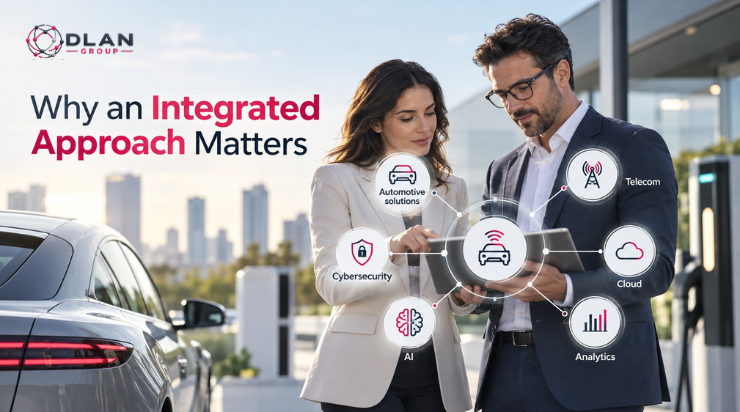
Why an Integrated Approach Matters
The strongest mobility solutions are unlikely to depend on one technology.
Instead, businesses will need to combine multiple capabilities.
Automotive solutions can support vehicle-related requirements.
Telecom provides connectivity.
Cloud provides scalable digital infrastructure.
Analytics turns information into insights.
AI supports intelligent automation.
Cybersecurity protects the ecosystem.
IT consulting helps align everything with business goals.
This integrated approach can help businesses create mobility solutions that are not only technologically advanced but also commercially useful.
Final Thoughts
Intelligent mobility is changing the automotive and transportation landscape.
Connected vehicles, cloud platforms, telecom networks, AI, analytics, and cybersecurity are creating new opportunities for businesses to improve efficiency and customer experience.
But successful mobility transformation requires more than adopting individual technologies.
Businesses need a connected strategy.
DLAN Group brings together automotive solutions, mobility services, telecom, cloud, cybersecurity, IT consulting, and digital innovation as part of its wider technology ecosystem.
Businesses can explore the DLAN Group portfolio to learn more about its connected digital platforms and solutions.
For organizations exploring intelligent mobility, automotive technology, or broader digital transformation, the DLAN contact page provides a direct way to discuss business requirements with the DLAN team.


Leave a Reply
Want to join the discussion?Feel free to contribute!