What Is a Digital Ecosystem? A Complete Guide for Modern Businesses
Businesses today rely on more technology than ever before. From cloud platforms and cybersecurity systems to artificial intelligence, telecommunications, data analytics, and connected devices, technology has become part of almost every business operation.
But using different technologies separately is not enough.
Modern businesses need these technologies to work together. This is where the concept of a digital ecosystem becomes important.
A digital ecosystem connects different technologies, systems, platforms, people, and processes so they can work together more effectively. Instead of treating cloud computing, cybersecurity, data, AI, telecom, and IT infrastructure as separate areas, businesses can connect them into one coordinated environment.
According to DLAN Group, modern businesses can benefit from an integrated approach that brings together cybersecurity, cloud solutions, telecom, IT consulting, data analytics, and other digital capabilities.
But what exactly is a digital ecosystem, how does it work, and why does it matter for businesses?
What Is a Digital Ecosystem?
A digital ecosystem is a connected network of technologies, systems, services, people, and processes that work together to support business goals.
Think of it like an ecosystem in nature. Different elements have their own functions, but they also depend on each other. In the same way, a company’s cloud infrastructure may store information, cybersecurity tools may protect it, analytics systems may study it, and AI tools may use that information to support better decisions.
The goal is not simply to have more technology. The goal is to make technology work together.
For example, a business might use:
- Cloud computing to store and access information
- Cybersecurity solutions to protect systems and data
- Telecom infrastructure to maintain communication
- Data analytics to understand business information
- AI to automate tasks and identify patterns
- IT consulting to plan and manage technology
- GRC practices to manage risk and compliance
- Connected mobility solutions for transportation-related operations
When these components are properly connected, businesses can create a more efficient and responsive digital environment.
Why Are Digital Ecosystems Becoming Important?
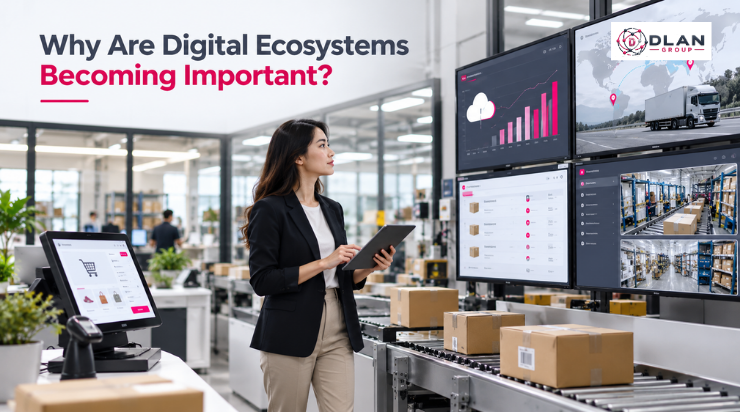
Businesses are no longer operating in simple technology environments. Employees work from different locations, customers expect faster services, data is generated constantly, and cyber threats continue to evolve.
At the same time, companies are adopting more digital tools to manage everyday operations.
Using disconnected systems can create problems. Data may remain trapped in separate platforms, employees may have to switch between multiple tools, and management may struggle to get a complete view of business performance.
A digital ecosystem helps reduce this fragmentation.
Instead of having technology operate in isolation, businesses can create connections between their systems. This can improve communication, information sharing, security, and decision-making.
Businesses also face many challenges that are not immediately visible. Our discussion of hidden business challenges explores how operational and technology-related problems can affect business growth.
The Main Components of a Digital Ecosystem
A digital ecosystem can look different for every business. A small company may need a simple combination of cloud applications, cybersecurity, communication tools, and analytics. A large enterprise may require a much more complex infrastructure.
However, several important components commonly form the foundation of a modern digital ecosystem.
1. Cloud Computing
Cloud technology has become an important part of modern business infrastructure.
Instead of depending entirely on physical servers and on-site systems, businesses can use cloud environments to access computing resources, applications, storage, and other services.
Cloud solutions can support flexibility and scalability. A business can adapt its technology environment as its needs change.
Cloud technology also connects with other parts of the digital ecosystem. Data stored in the cloud can support analytics, applications can use AI services, and security controls can protect cloud-based resources.
This makes cloud computing more than just a storage solution. It can become an important foundation for a connected digital environment.
2. Cybersecurity
A connected ecosystem also creates a greater need for security.
When systems, applications, employees, devices, and networks are connected, businesses need to protect every important point of interaction.
Cybersecurity can include areas such as:
- Network security
- Data protection
- Identity and access management
- Threat monitoring
- Security assessments
- Risk management
- Incident response
- Cloud security
Security should not be added after a digital ecosystem has already been built. It should be considered from the beginning.
A strong digital ecosystem balances connectivity with protection.
3. Telecom and Connectivity
Technology cannot work effectively without reliable communication and connectivity.
Telecom services provide the infrastructure businesses need to communicate, exchange information, connect locations, and support digital operations.
For companies operating across multiple locations, reliable connectivity can be particularly important.
Cloud applications, remote teams, connected devices, customer communication, and real-time data services all depend on effective connectivity.
This is why telecom should be considered part of the wider digital ecosystem rather than a completely separate business function.
4. Data Analytics
Every digital business produces data.
Customer interactions, transactions, website activity, operational systems, connected devices, and internal processes can all generate valuable information.
However, data alone does not automatically create value.
Businesses need to understand that data, identify patterns, and turn information into useful insights. Data analytics helps organizations examine information and use it to support better decisions.
For example, analytics can help businesses understand customer behavior, monitor operations, identify performance trends, and discover potential problems.
When analytics is connected to cloud infrastructure, AI, and business systems, organizations can create a more complete view of their operations.
5. Artificial Intelligence
Artificial intelligence is becoming another important part of the digital ecosystem.
AI can help businesses analyze information, automate repetitive tasks, identify patterns, support customer experiences, and improve operational processes.
However, AI should not be viewed as a standalone solution.
Its effectiveness often depends on the quality of the data, infrastructure, security, and systems around it.
For example, AI may analyze business data, while cloud infrastructure provides computing resources and cybersecurity protects the environment.
This is why AI works best when it becomes part of a wider digital ecosystem.
Businesses interested in digital innovation can also explore our earlier discussion of empowering businesses with digital innovation.
6. IT Consulting and Technology Strategy
A business can have access to many technologies and still struggle to use them effectively.
This is where IT consulting becomes valuable.
Technology decisions should be connected to business objectives. Before investing in new systems, organizations need to understand their current infrastructure, identify gaps, evaluate risks, and determine what solutions are actually required.
IT consulting can help businesses approach these decisions strategically.
Instead of adopting technology simply because it is popular, organizations can focus on solutions that solve specific business problems.
This can also help reduce unnecessary technology spending and prevent businesses from building disconnected systems.
7. Governance, Risk, and Compliance
A digital ecosystem also needs governance.
As businesses become more dependent on technology, they need processes for managing risk, meeting regulatory requirements, protecting information, and maintaining accountability.
Governance, Risk, and Compliance (GRC) provides a framework for managing these areas.
GRC can help businesses understand:
- What risks they face
- Which regulations apply to them
- How technology should be managed
- Who is responsible for important processes
- How security and compliance should be monitored
GRC is particularly important when businesses operate across multiple technologies, locations, or industries.
How Do These Technologies Work Together?
The real value of a digital ecosystem comes from integration.
Imagine a business receives information from customers through its digital platforms. That information can be securely stored using cloud infrastructure. Analytics tools can examine the data, while AI can identify patterns or automate certain processes.
At the same time, telecom infrastructure keeps employees and systems connected. Cybersecurity tools protect the environment, while GRC processes help the organization manage risk and compliance.
IT consultants can help the business evaluate and improve the entire structure.
Each component has a different role, but they support the same business environment.
This is the difference between using technology and building a connected technology ecosystem.
Benefits of a Digital Ecosystem
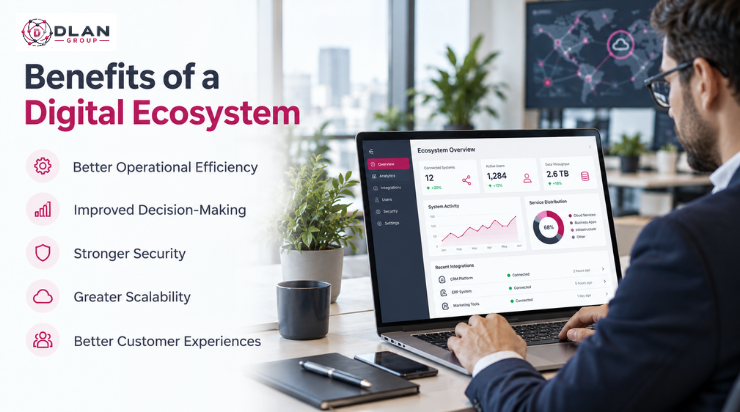
A well-designed digital ecosystem can provide several benefits.
Better Operational Efficiency
Connected systems can reduce repetitive manual work and improve information flow between departments.
Employees can access the information and tools they need without relying on multiple disconnected processes.
Improved Decision-Making
When information from different systems can be analyzed together, businesses can gain a broader understanding of their operations.
This can help managers make decisions based on current information rather than assumptions.
Stronger Security
Security can be integrated across different parts of the technology environment instead of being treated as a single isolated function.
This can help organizations identify vulnerabilities and respond to threats more effectively.
Greater Scalability
Businesses change over time.
A connected digital ecosystem can make it easier to introduce new technologies, expand operations, support additional users, or adapt infrastructure as requirements change.
Better Customer Experiences
Customers increasingly expect businesses to be fast, reliable, connected, and responsive.
Integrated systems can help organizations provide smoother digital experiences and respond more effectively to customer needs.
Digital Ecosystems Are Not Only About Software
One common misunderstanding is that a digital ecosystem only includes software and online platforms.
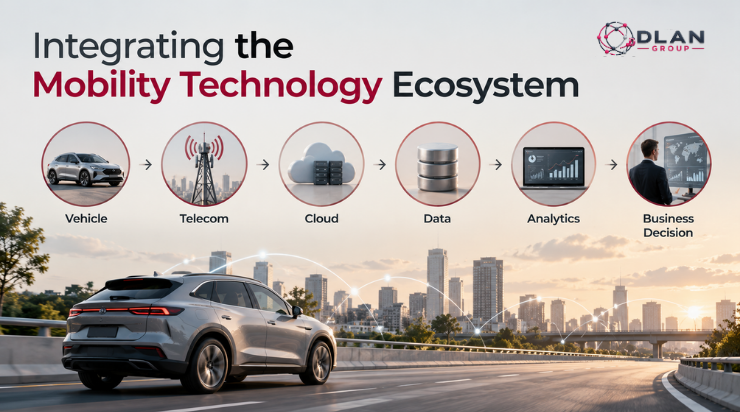
In reality, modern ecosystems can also include physical infrastructure, connected vehicles, mobility solutions, communication networks, and other technology-enabled services.
This becomes particularly relevant in industries such as transportation and automotive.
Connected vehicles, intelligent mobility systems, data platforms, and communication technologies can work together to create more responsive transportation environments.
DLAN Group’s broader portfolio demonstrates how different technology and business solutions can exist within a wider ecosystem.
This approach shows that digital transformation is not limited to websites, applications, or cloud platforms. It can extend into the physical world as technology becomes more connected.
What Should Businesses Consider Before Building a Digital Ecosystem?
There is no single digital ecosystem that works for every organization.
Businesses should first understand their own requirements.
Start With Business Goals
Technology should support business objectives.
Before selecting a solution, organizations should ask what they want to improve. Is the goal better security, faster operations, improved customer service, lower costs, stronger connectivity, or better decision-making?
Review Existing Infrastructure
Businesses should understand what systems they already use and where gaps exist.
Replacing everything may not always be necessary. In some cases, existing systems can be integrated with new technologies.
Prioritize Security
Cybersecurity should be part of the planning process from the beginning.
Organizations should consider access controls, data protection, network security, cloud security, monitoring, and risk management.
Focus on Integration
A collection of powerful technologies does not automatically create an effective ecosystem.
Businesses should consider whether their systems can communicate and exchange information effectively.
Think About Future Growth
Technology investments should support both current and future requirements.
Businesses should consider scalability before implementing new infrastructure so that their technology environment can evolve as the organization grows.

The Role of an Integrated Technology Partner
Building and managing a digital ecosystem can become complicated when organizations have to work with multiple technology providers.
An integrated technology partner can help businesses understand their requirements and create a more coordinated approach.
This can be especially useful when cybersecurity, cloud, telecom, IT consulting, data analytics, AI, GRC, and other solutions need to work together.
DLAN Group brings multiple technology capabilities together as part of its broader business solutions. Its company overview provides more information about its expertise, global team, and approach to technology services.
Businesses can also explore different technology services for growing organizations to understand why multiple business capabilities may be required as an organization develops.
What Does the Future of Digital Ecosystems Look Like?
Digital ecosystems are likely to become increasingly intelligent and connected.
AI will continue to influence how businesses analyze information and automate processes. Cloud environments will continue to support flexible infrastructure. Cybersecurity will become increasingly important as more systems become connected.
At the same time, data will continue to connect different parts of the organization.
Businesses may also see greater integration between digital platforms and physical environments, particularly in areas such as automotive technology, mobility, telecommunications, and connected services.
The future is therefore not simply about adopting more technology.
It is about creating technology that works together.
Our article on the future of business services explores why businesses increasingly need more than individual technology solutions.
Final Thoughts
A digital ecosystem is a connected environment where technology, data, people, processes, and services work together toward common business goals.
Cloud computing provides infrastructure. Cybersecurity protects it. Telecom keeps systems connected. Data analytics turns information into insights. AI supports intelligent processes. IT consulting helps businesses make strategic technology decisions, while GRC helps organizations manage risk and compliance.
When these capabilities operate together, businesses can create a more connected, secure, and adaptable technology environment.
The key is to avoid thinking about technology as a collection of separate tools. Instead, businesses should look at the bigger picture and consider how their systems can work together.
As digital requirements continue to grow, organizations that build connected and flexible ecosystems can be better positioned to adapt to changing customer expectations, security risks, technologies, and market conditions.
To learn more about DLAN Group’s technology and business solutions or discuss your organization’s requirements, contact DLAN Group.