Cybersecurity Risk Assessment: A Practical Guide for Growing Businesses

Cybersecurity is no longer only an IT department concern. A security incident can affect customers, employees, finances, business operations, legal obligations, supplier relationships, and company reputation.

Growing businesses often add employees, applications, cloud services, devices, suppliers, customer data, and remote-access tools quickly. Every addition can introduce new security risks if it is not properly assessed and managed.

A cybersecurity risk assessment helps an organization understand what needs protection, which threats are most relevant, where weaknesses exist, and which improvements should be prioritized.

It gives management a structured way to make security decisions instead of reacting to individual threats without understanding the wider business impact.

Organizations can work with DLAN Group to assess technology risks and develop a more secure, scalable, and resilient digital environment.

What Is a Cybersecurity Risk Assessment?

A cybersecurity risk assessment is a structured process used to identify, analyze, and prioritize risks affecting an organization’s systems, data, networks, users, applications, and digital operations.

It examines four main areas:

  1. What technology and information does the business depend on?
  2. Which threats could affect those assets?
  3. Which vulnerabilities could allow those threats to succeed?
  4. What would the business impact be?

The result should be a prioritized action plan showing which risks require immediate attention, which can be addressed over time, and which may be accepted or transferred.

Why Cybersecurity Risk Assessments Matter

Without a risk assessment, businesses may spend money on security tools without addressing their most serious weaknesses.

For example, an organization may invest in advanced network protection while:

  • Former employees still have active accounts
  • Sensitive files are shared publicly
  • Backups have never been tested
  • Administrators do not use multifactor authentication
  • Employees use weak passwords
  • Third-party vendors have excessive access
  • Cloud systems are configured incorrectly
  • Critical applications are no longer supported

A risk assessment helps connect cybersecurity investment to actual operational priorities.

Cybersecurity is also one of the core elements of a future-ready business strategy.

Who Needs a Cybersecurity Risk Assessment?

Every organization using digital technology can benefit from an assessment, but it becomes especially important when a business:

  • Stores customer or employee data
  • Processes financial information
  • Uses cloud applications
  • Supports remote employees
  • Depends on online services
  • Works with external vendors
  • Is expanding rapidly
  • Has experienced a security incident
  • Must meet regulatory or contractual requirements
  • Uses outdated systems
  • Has not reviewed security controls recently
  • Does not clearly understand its digital assets

Smaller businesses should not assume they are too small to face cybersecurity threats. Limited internal resources, weak security processes, and dependence on a few systems may increase their operational exposure.
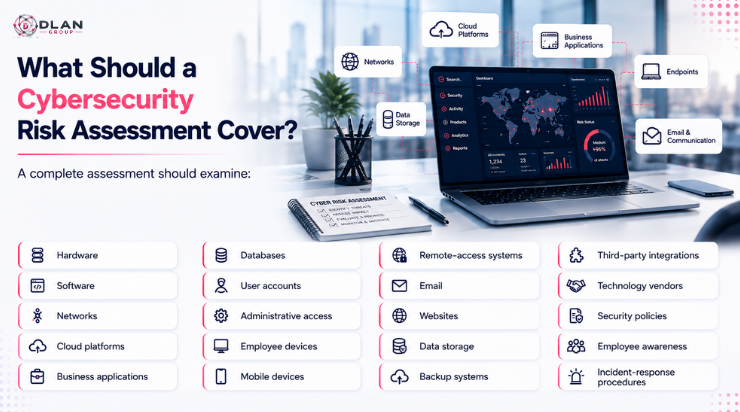
What Should a Cybersecurity Risk Assessment Cover?

A complete assessment should examine:

  • Hardware
  • Software
  • Networks
  • Cloud platforms
  • Business applications
  • Databases
  • User accounts
  • Administrative access
  • Employee devices
  • Mobile devices
  • Remote-access systems
  • Email
  • Websites
  • Data storage
  • Backup systems
  • Third-party integrations
  • Technology vendors
  • Security policies
  • Employee awareness
  • Incident-response procedures

It should consider both technical weaknesses and business-process weaknesses.

Step-by-Step Cybersecurity Risk Assessment Process

1. Define the Scope

Begin by deciding which parts of the organization will be assessed.

The assessment may cover:

  • The complete organization
  • One office
  • A specific department
  • A cloud environment
  • A customer-facing application
  • Remote working
  • A new business acquisition
  • A critical system
  • A supplier relationship

The scope should be clear enough to manage while still covering the assets and processes that matter.

For a first assessment, growing businesses should usually prioritize systems supporting customer service, finance, operations, communication, employee access, and sensitive data.

2. Identify Business-Critical Assets

Create an inventory of the systems, information, and resources the business needs to operate.

These may include:

  • Customer databases
  • Financial records
  • Employee information
  • Email accounts
  • Cloud platforms
  • Websites
  • Business applications
  • Intellectual property
  • Contracts
  • Payment systems
  • Network equipment
  • Employee devices
  • Backup systems
  • Telecom services
  • Administrative accounts

Each asset should have a defined owner responsible for understanding its business use and protection requirements.

A broad operational review may also reveal hidden challenges slowing business growth.

3. Classify Information

Not all information requires the same level of protection.

Businesses can classify data into categories such as:

Public Information

Information approved for public access, including published marketing content and public announcements.

Internal Information

Information intended for employees and approved business partners.

Confidential Information

Sensitive operational, commercial, customer, employee, or financial information requiring controlled access.

Restricted Information

Highly sensitive data that could cause serious legal, financial, operational, or reputational damage if exposed.

Classification helps determine appropriate access controls, encryption, storage, sharing, retention, and deletion requirements.
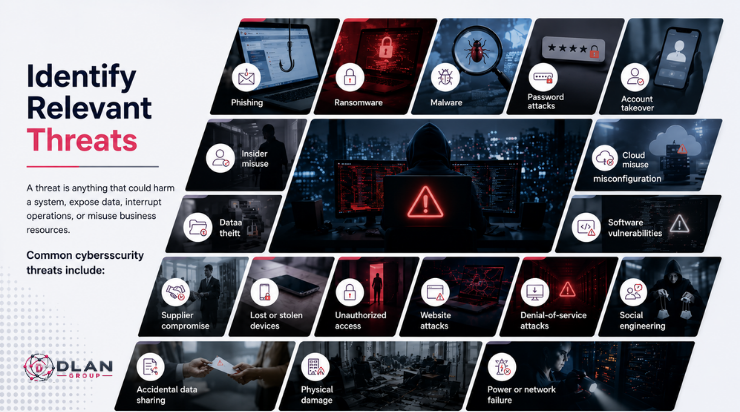
4. Identify Relevant Threats

A threat is anything that could harm a system, expose data, interrupt operations, or misuse business resources.

Common cybersecurity threats include:

  • Phishing
  • Ransomware
  • Malware
  • Password attacks
  • Account takeover
  • Insider misuse
  • Data theft
  • Cloud misconfiguration
  • Software vulnerabilities
  • Supplier compromise
  • Lost or stolen devices
  • Unauthorized access
  • Website attacks
  • Denial-of-service attacks
  • Social engineering
  • Accidental data sharing
  • Physical damage
  • Power or network failure

The assessment should focus on threats relevant to the organization’s technology, sector, locations, users, and business model.

5. Identify Vulnerabilities

A vulnerability is a weakness that may allow a threat to cause harm.

Examples include:

  • Weak passwords
  • Missing software updates
  • Unsupported systems
  • Excessive user access
  • Shared administrator accounts
  • Unencrypted devices
  • Unprotected backups
  • Insecure cloud settings
  • Poor employee awareness
  • Missing security policies
  • Inadequate logging
  • No incident-response plan
  • Uncontrolled third-party access
  • Weak network segmentation
  • Unused accounts remaining active

Vulnerabilities can be discovered through:

  • System reviews
  • Configuration assessments
  • Vulnerability scanning
  • Access reviews
  • Employee interviews
  • Policy reviews
  • Penetration testing
  • Backup testing
  • Cloud assessments
  • Supplier evaluations

6. Assess Existing Security Controls

Document the protections already in place.

These may include:

  • Firewalls
  • Endpoint protection
  • Multifactor authentication
  • Email filtering
  • Data encryption
  • Network monitoring
  • Access-control policies
  • Security awareness training
  • Backup systems
  • Incident-response plans
  • Vulnerability management
  • Cloud security tools
  • Physical security
  • Supplier agreements

The purpose is to determine whether existing controls reduce risk sufficiently.

A control should not be considered effective simply because it has been purchased. Its configuration, coverage, monitoring, maintenance, and use should also be reviewed.

7. Evaluate Likelihood

Likelihood estimates how probable it is that a threat will exploit a vulnerability.

Factors affecting likelihood may include:

  • Ease of exploitation
  • Exposure to the internet
  • Previous incidents
  • Employee behavior
  • Availability of attack tools
  • Security-control strength
  • Number of users
  • System age
  • Supplier access
  • Sensitivity of the data
  • Value to attackers

Organizations can use simple categories such as:

  • Low
  • Medium
  • High
  • Critical

The scoring method should be consistent across all assessed risks.

8. Evaluate Business Impact

Impact measures what may happen if a security incident occurs.

Potential consequences include:

  • Operational downtime
  • Financial loss
  • Data exposure
  • Customer disruption
  • Legal costs
  • Contractual penalties
  • Regulatory action
  • Reputation damage
  • Lost productivity
  • Recovery expenses
  • Intellectual-property theft
  • Supplier disruption
  • Safety concerns

Business managers should participate in impact assessment because technical teams may not fully understand the commercial consequences of system failure.

A customer-facing application may appear technically simple but still be critical if it supports most of the company’s revenue.
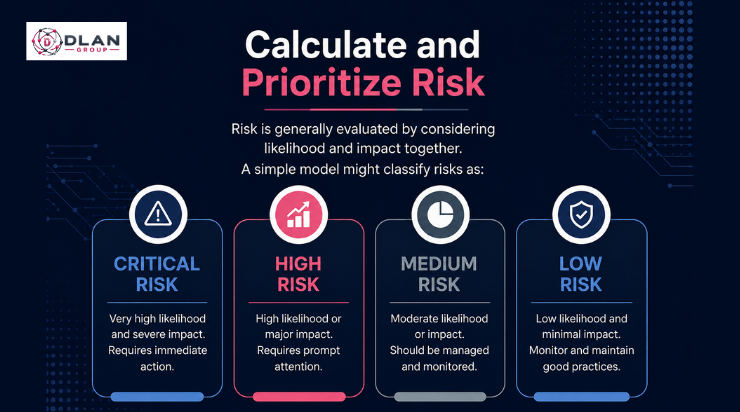
9. Calculate and Prioritize Risk

Risk is generally evaluated by considering likelihood and impact together.

A simple model might classify risks as:

Critical Risk

Immediate action is required because the issue could create severe business harm and has a significant chance of occurring.

High Risk

The issue requires priority action and senior-management oversight.

Medium Risk

The issue should be addressed within a defined timeframe.

Low Risk

The issue can be monitored or accepted when the cost of further treatment is not justified.

The organization should focus first on risks affecting critical systems, sensitive data, administrative access, backups, and operational continuity.

10. Select Risk Treatment Options

Businesses can respond to cybersecurity risks in four main ways.

Reduce the Risk

Introduce controls that reduce the likelihood or impact.

Examples include:

  • Enabling multifactor authentication
  • Updating software
  • Removing unnecessary access
  • Encrypting information
  • Training employees
  • Improving backups
  • Monitoring systems
  • Segmenting networks

Avoid the Risk

Stop the activity creating the risk.

For example, the company may retire an unsupported application rather than continue operating it.

Transfer the Risk

Transfer some financial or operational responsibility through insurance, contracts, or specialist providers.

The underlying risk may still exist, so transfer should not replace basic security controls.

Accept the Risk

Management may formally accept a low-level risk when further controls would be impractical or disproportionately expensive.

Risk acceptance should be documented and reviewed regularly.

Important Areas to Review

User Access and Identity

User accounts are common entry points for security incidents.

Review:

  • Multifactor authentication
  • Password requirements
  • Administrative privileges
  • Former employee accounts
  • Shared accounts
  • Guest access
  • Remote access
  • Access-review frequency

Employees should receive only the permissions required for their responsibilities.

Email Security

Email is frequently used for phishing, impersonation, malicious attachments, and fraudulent payment requests.

Review:

  • Spam and phishing filters
  • Email authentication
  • Multifactor authentication
  • Employee reporting processes
  • Executive impersonation protection
  • Attachment controls
  • Security awareness training

Cloud Security

Cloud services can be secure, but incorrect configurations and excessive access can expose business information.

Review:

  • Administrator access
  • Public sharing
  • Data encryption
  • Logging
  • Backup settings
  • Third-party integrations
  • User permissions
  • Security alerts
  • Inactive accounts

Cloud security should be included in any wider plan for business digital innovation.

Endpoint Security

Every laptop, desktop, tablet, and mobile device may create a potential entry point.

Review:

  • Security software
  • Disk encryption
  • Updates
  • Screen locking
  • Device inventory
  • Remote wiping
  • Local administrator rights
  • Personal-device policies

Backup and Recovery

Backups protect operations only when they are complete, secure, and recoverable.

Review:

  • Backup frequency
  • Backup coverage
  • Storage location
  • Encryption
  • Access controls
  • Offline or isolated copies
  • Restoration testing
  • Recovery time
  • Monitoring and alerts

A business should not discover during a ransomware incident that its backups are incomplete or inaccessible.

Third-Party Vendors

Suppliers may have access to systems, applications, networks, or sensitive data.

Review:

  • Vendor access
  • Security obligations
  • Data-handling practices
  • Incident-notification requirements
  • Subcontractors
  • Account ownership
  • Contract termination
  • Access removal
  • Business-continuity arrangements

Working with too many disconnected vendors may create security gaps and unclear responsibility. A vendor consolidation strategy can improve visibility and accountability.

Employee Awareness

Employees make daily decisions affecting cybersecurity.

They should understand how to:

  • Recognize phishing
  • Protect passwords
  • Report suspicious activity
  • Handle sensitive data
  • Use approved applications
  • Secure remote work
  • Avoid unauthorized file sharing
  • Respond to lost devices

Training should be practical, role-specific, and repeated regularly.

How Often Should a Cybersecurity Risk Assessment Be Conducted?

A full assessment should generally be performed regularly and whenever significant changes occur.

Triggers may include:

  • New cloud platforms
  • New business applications
  • Company expansion
  • Mergers or acquisitions
  • New regulatory requirements
  • Major supplier changes
  • Remote-work expansion
  • Security incidents
  • Significant employee growth
  • New customer requirements
  • Office relocation
  • Infrastructure modernization

Risk assessment should be treated as an ongoing business process rather than a one-time project.

The move toward connected business services also means that security reviews must consider relationships between systems, providers, people, and business processes.
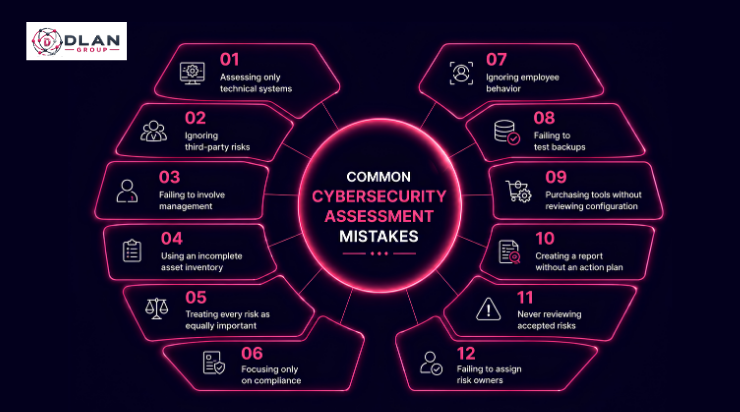
Common Cybersecurity Assessment Mistakes

Businesses should avoid:

  • Assessing only technical systems
  • Ignoring third-party risks
  • Failing to involve management
  • Using an incomplete asset inventory
  • Treating every risk as equally important
  • Focusing only on compliance
  • Ignoring employee behavior
  • Failing to test backups
  • Purchasing tools without reviewing configuration
  • Creating a report without an action plan
  • Never reviewing accepted risks
  • Failing to assign risk owners

An assessment is valuable only when its findings lead to prioritized and measurable improvements.

Creating a Cybersecurity Improvement Plan

The final plan should include:

  • Identified risk
  • Affected asset
  • Business impact
  • Current controls
  • Required improvement
  • Responsible owner
  • Budget
  • Completion deadline
  • Priority level
  • Progress status
  • Review date

Quick improvements may include:

  • Enabling multifactor authentication
  • Removing unused accounts
  • Updating unsupported software
  • Restricting administrator access
  • Encrypting devices
  • Testing backups
  • Training employees
  • Reviewing cloud-sharing settings
  • Documenting incident contacts
  • Updating vendor access

Longer-term improvements may involve:

  • Replacing legacy systems
  • Redesigning networks
  • Implementing centralized identity management
  • Introducing continuous monitoring
  • Developing an incident-response program
  • Consolidating vendors
  • Modernizing backup infrastructure
  • Hiring or outsourcing specialist expertise

Cybersecurity should be considered alongside other essential services supporting business growth.

Should the Assessment Be Internal or External?

An internal assessment may be suitable when the organization has experienced cybersecurity professionals, documented processes, and suitable assessment tools.

An external assessment may provide:

  • Independent evaluation
  • Specialist expertise
  • Broader industry experience
  • Technical testing
  • Objective prioritization
  • Additional management confidence

Many businesses use both approaches. Internal teams maintain ongoing risk management, while external specialists conduct periodic independent reviews.

The DLAN Group portfolio includes connected technology, cybersecurity, AI, digital, mobility, and business platforms capable of supporting wider operational requirements.
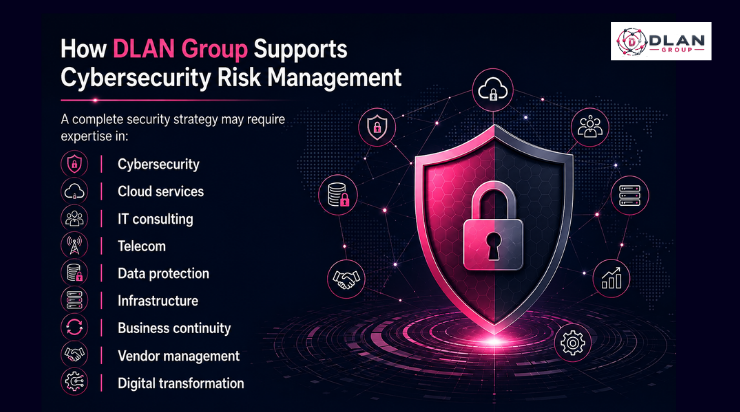
How DLAN Group Supports Cybersecurity Risk Management

Cybersecurity risks are connected to cloud infrastructure, telecom, employee access, business applications, vendors, data, and operational processes.

A complete security strategy may require expertise in:

  • Cybersecurity
  • Cloud services
  • IT consulting
  • Telecom
  • Data protection
  • Infrastructure
  • Business continuity
  • Vendor management
  • Digital transformation

DLAN Group’s broader approach to modern business services supports organizations seeking more coordinated and resilient operations.

Conclusion: Turn Cybersecurity Risk Into a Manageable Business Priority

A cybersecurity risk assessment helps businesses move from uncertainty to informed action.

By identifying critical assets, relevant threats, technical vulnerabilities, business impacts, and existing controls, organizations can focus their security investment where it matters most.

The objective is not to eliminate every possible risk. It is to understand risk clearly, reduce serious exposure, assign responsibility, and build the ability to respond and recover.

Strengthen Your Cybersecurity With DLAN Group

Do not wait for a data breach, ransomware attack, account compromise, or system outage to expose weaknesses in your organization.

Contact DLAN Group to assess your current security position, identify priority risks, strengthen digital controls, and build a cybersecurity strategy aligned with your business operations.

Frequently Asked Questions

What is the purpose of a cybersecurity risk assessment?

Its purpose is to identify valuable digital assets, understand relevant threats and vulnerabilities, evaluate potential business impact, and prioritize appropriate security improvements.

How long does a cybersecurity risk assessment take?

The timeframe depends on the organization’s size, number of systems, locations, users, suppliers, and assessment scope. A focused review may take days or weeks, while a complete enterprise assessment can require several phases.

What is the difference between a vulnerability assessment and a risk assessment?

A vulnerability assessment identifies technical weaknesses. A risk assessment considers those weaknesses together with threats, likelihood, existing controls, and potential business impact.

Should small businesses conduct cybersecurity risk assessments?

Yes. Small businesses often depend heavily on a limited number of systems and employees. A serious incident may therefore cause significant operational and financial disruption.

What should happen after a cybersecurity risk assessment?

The organization should create a prioritized improvement plan, assign owners, define deadlines, allocate resources, track progress, and reassess risks regularly.
Building a Future-Ready Business: Key Strategies for Long-Term Digital Growth

Businesses today are operating in a rapidly changing environment. Customer expectations are increasing, competition is becoming stronger, and technology continues to reshape how companies operate.

Organizations that rely only on traditional processes often struggle to keep up with changing market demands. Manual workflows, disconnected systems, limited data visibility, and outdated infrastructure can slow down growth and reduce efficiency.

A future-ready business is not only focused on adopting new technology. It is focused on creating flexible systems, improving decision-making, strengthening operations, and preparing for future challenges.

Digital transformation has become an important part of this journey. By combining technologies such as cloud computing, artificial intelligence, automation, cybersecurity, and data analytics, businesses can create stronger foundations for sustainable growth.

Companies like DLAN Group help organizations build modern technology environments through IT consulting, cloud solutions, cybersecurity, telecom services, and digital transformation strategies. Similarly, it supports businesses by using artificial intelligence and data-driven solutions to improve efficiency and unlock new opportunities.

Whether a company operates in professional services, transportation, manufacturing, automotive, healthcare, or any other industry, becoming future-ready requires a clear technology strategy.

What Does It Mean to Be a Future-Ready Business?

A future-ready business is an organization that can adapt quickly to changes while maintaining operational efficiency.

It does not simply invest in technology because it is popular. Instead, it chooses solutions that support business goals, improve customer experiences, and create measurable value.

Future-ready companies usually have:

  • Flexible digital infrastructure
  • Connected business systems
  • Data-driven decision-making processes
  • Automated workflows
  • Strong cybersecurity practices
  • Scalable cloud environments
  • Customer-focused digital experiences
  • A culture of continuous improvement

These capabilities allow businesses to respond faster when customer needs change, new competitors enter the market, or unexpected challenges occur.

Why Digital Transformation Is Important for Business Growth

Digital transformation is no longer limited to large enterprises. Businesses of all sizes are using technology to improve productivity, reduce costs, and create better customer experiences.

Traditional business models often depend on disconnected tools and manual processes. Employees may spend significant time performing repetitive tasks, searching for information, or managing different systems.

Digital transformation helps companies create connected operations where information flows smoothly between departments.

For example:

  • Sales teams can access updated customer information.
  • Managers can monitor performance through real-time dashboards.
  • Employees can automate repetitive administrative tasks.
  • Customers can receive faster and more personalized services.
  • Leaders can make decisions based on accurate data.

A strong digital transformation strategy helps businesses move from reactive operations to proactive growth.

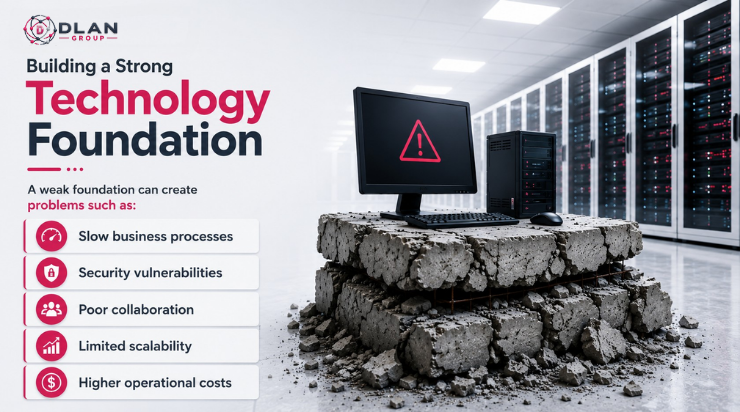
Building a Strong Technology Foundation

Every future-ready business requires a reliable technology foundation.

Technology infrastructure includes the systems, applications, networks, and platforms that support daily operations.

A weak foundation can create problems such as:

  • Slow business processes
  • Security vulnerabilities
  • Poor collaboration
  • Limited scalability
  • Higher operational costs

Modern businesses need technology environments that can grow with their requirements.

This includes:

Cloud-Based Infrastructure

Cloud technology allows businesses to access computing resources, applications, and storage without depending completely on physical infrastructure.

Cloud solutions provide benefits such as:

  • Better scalability
  • Remote accessibility
  • Improved collaboration
  • Faster deployment
  • Reduced infrastructure limitations

Organizations can increase or decrease resources based on demand, making cloud technology suitable for growing businesses.

DLAN Group provides cloud-focused technology solutions that help businesses create secure and scalable digital environments.

Using Artificial Intelligence to Improve Business Operations

Artificial intelligence has become one of the most important technologies shaping the future of business.

AI allows companies to analyze information, automate processes, improve customer interactions, and make better decisions.

Businesses are using AI for:

  • Customer support automation
  • Data analysis
  • Predictive insights
  • Document processing
  • Workflow automation
  • Personalized recommendations
  • Business intelligence

For example, AI-powered systems can analyze large amounts of business data and identify patterns that humans may miss.

Through DLAN.ai, businesses can explore AI-driven solutions that help improve productivity, automate processes, and transform how teams work with information.

AI does not replace business strategy. Instead, it helps companies make smarter decisions and operate more efficiently.

The Importance of Data-Driven Decision Making

Data has become one of the most valuable assets for modern organizations.

Every business generates information through:

  • Customer interactions
  • Sales activities
  • Website visits
  • Operational systems
  • Financial records
  • Employee processes

However, collecting data is not enough. Businesses need the ability to understand and use that information effectively.

Data analytics helps organizations:

  • Identify customer trends
  • Understand business performance
  • Predict future opportunities
  • Improve resource planning
  • Reduce operational waste
  • Make informed decisions

A future-ready company does not rely only on assumptions. It uses accurate information to guide strategic decisions.

Industries such as transportation and automotive are already benefiting from data-driven approaches.

For example, companies like GCS Transfer can use technology and analytics to improve customer experiences, optimize service operations, and understand travel patterns.

Similarly, automotive businesses such as APG OEM can benefit from better data management for inventory planning, supply chain visibility, and operational efficiency.

Improving Business Processes Through Automation

Manual processes can slow down growth.

Employees often spend valuable time completing repetitive tasks that could be automated.

Business automation helps organizations improve efficiency by reducing unnecessary manual work.

Common areas where automation can help include:

  • Customer communication
  • Reporting
  • Data entry
  • Workflow approvals
  • Inventory management
  • Scheduling
  • Document processing

Automation allows employees to focus on higher-value activities such as strategy, creativity, and customer relationships.

A well-designed automation strategy does not remove the human element. Instead, it allows teams to work smarter.

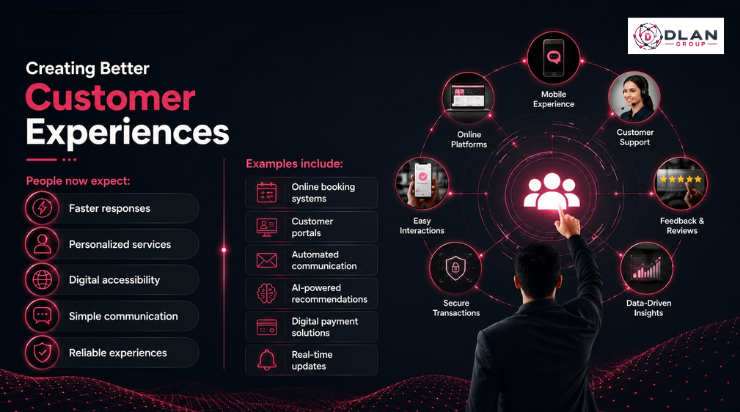
Creating Better Customer Experiences

Customer expectations have changed significantly.

People now expect:

  • Faster responses
  • Personalized services
  • Digital accessibility
  • Simple communication
  • Reliable experiences

Businesses that fail to meet these expectations may lose customers to competitors.

Technology helps companies understand customer needs and create smoother experiences.

Examples include:

  • Online booking systems
  • Customer portals
  • Automated communication
  • AI-powered recommendations
  • Digital payment solutions
  • Real-time updates

The transportation industry is a strong example of this change. Modern customers expect convenient booking, reliable service, and transparent communication.

Companies such as GCS Transfer demonstrate how technology can support better customer experiences in service-based industries.

Strengthening Cybersecurity for Long-Term Growth

As businesses become more digital, cybersecurity becomes increasingly important.

More connected systems mean more opportunities but also more risks.

Businesses must protect:

  • Customer information
  • Financial data
  • Employee records
  • Business applications
  • Digital infrastructure

A future-ready company integrates security into every technology decision.

Important cybersecurity practices include:

  • Access control
  • Data protection
  • Employee awareness
  • Regular monitoring
  • Secure cloud configuration
  • Risk management

DLAN Group helps organizations strengthen their cybersecurity approach by combining protection, governance, and technology expertise.

Security should not be considered an additional feature. It should be part of the business foundation.

Creating Connected Business Ecosystems

Modern businesses rarely operate using a single system.

They depend on multiple platforms, partners, suppliers, customers, and digital tools.

A connected ecosystem allows different systems to communicate effectively.

Benefits include:

  • Better collaboration
  • Faster information sharing
  • Improved visibility
  • Reduced duplication
  • Better customer service

For example:

A transportation business may need connected booking, customer management, payment, and fleet systems.

An automotive business may require integration between inventory, suppliers, production planning, and customer management platforms.

Technology partners help organizations create these connected environments.

The Role of Technology Consulting in Business Growth

Many businesses understand the importance of technology but struggle with choosing the right solutions.

Technology consulting helps companies:

  • Understand their current challenges
  • Identify improvement opportunities
  • Select suitable technologies
  • Plan implementation
  • Reduce unnecessary costs
  • Improve long-term scalability

Instead of adopting technology randomly, businesses can create a structured roadmap.

DLAN Group works with organizations to design technology strategies aligned with business objectives.

A successful technology investment should solve real business problems and create measurable improvement.

Preparing Employees for a Digital Future

Technology alone cannot transform a business.

Employees also need the skills and mindset required to use new systems effectively.

Companies should invest in:

  • Digital training
  • Technology awareness
  • Process improvement culture
  • Continuous learning

When employees understand new tools, adoption becomes easier and businesses gain more value from their investments.

A future-ready organization combines technology with human capability.

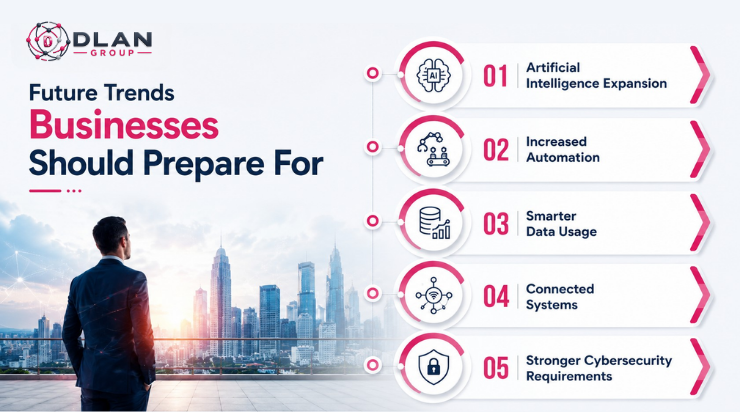
Future Trends Businesses Should Prepare For

The next generation of businesses will continue to be shaped by emerging technologies.

Important trends include:

Artificial Intelligence Expansion

AI will become more integrated into everyday business operations.

Increased Automation

More companies will automate repetitive workflows to improve productivity.

Smarter Data Usage

Organizations will rely more on analytics and real-time insights.

Connected Systems

Businesses will continue moving toward integrated digital ecosystems.

Stronger Cybersecurity Requirements

Security will become a critical part of every digital strategy.

Companies that prepare early will have stronger opportunities for future growth.

Frequently Asked Questions

What makes a business future-ready?

A future-ready business has flexible technology systems, strong cybersecurity, efficient processes, data-driven decision-making, and the ability to adapt quickly to change.

Why is digital transformation important for companies?

Digital transformation helps businesses improve efficiency, reduce costs, enhance customer experiences, and create better opportunities for growth.

How can AI help businesses?

AI can automate processes, analyze data, improve customer support, provide insights, and help companies make smarter decisions.

Is digital transformation only for large companies?

No. Businesses of all sizes can benefit from digital transformation by adopting solutions according to their needs and goals.

How does cybersecurity support business growth?

Cybersecurity protects important information, reduces risks, builds customer trust, and helps businesses operate safely in a digital environment.

Conclusion: Build a Business Ready for Tomorrow

The future belongs to businesses that can adapt, innovate, and use technology strategically.

Becoming future-ready is not about adopting every new technology. It is about creating a strong foundation that supports growth, efficiency, security, and customer satisfaction.

From AI-powered solutions and cloud infrastructure to cybersecurity and connected business systems, modern technology provides opportunities for organizations across every industry.

DLAN Group helps businesses transform their operations through advanced technology solutions, while DLAN.ai enables organizations to explore the power of AI and automation.

Whether you are improving customer experiences like service-based businesses, optimizing operations like automotive companies, or building scalable enterprise systems, the right technology strategy can help you achieve long-term success.

Contact DLAN Group today to explore how digital solutions can help your business become future-ready.

How Vendor Consolidation Can Reduce Cost, Risk, and Operational Complexity

As businesses grow, they usually add more service providers.

One company manages the website. Another provides cybersecurity. A separate provider handles cloud infrastructure. Additional vendors may supply hardware, telecom, transportation, automotive products, software, and technical support.

Each provider may solve an immediate problem, but the number of vendors can become difficult to control.

Invoices increase. Contracts renew at different times. Responsibilities overlap. Security standards become inconsistent. Employees do not always know which provider to contact.

Vendor consolidation can help businesses reduce this complexity by working with fewer, more capable, and better-connected service partners.

Organizations working with DLAN Group can access a connected ecosystem covering digital technology, security, infrastructure, regional support, automotive solutions, and professional mobility.

What Is Vendor Consolidation?

Vendor consolidation is the process of reducing the number of external providers used by a business and moving related services to a smaller group of trusted partners.

It does not mean placing every business function with one company.

Instead, it means identifying where multiple providers are delivering similar, connected, or overlapping services and determining whether those relationships can be simplified.

For example, a company may have separate providers for:

  • IT consulting
  • Cloud infrastructure
  • Cybersecurity
  • Telecom
  • Software support
  • Data management
  • Hardware
  • Digital platforms
  • Transportation
  • Automotive requirements

Some separation may be necessary. However, excessive fragmentation can create unnecessary cost and management pressure.

How Vendor Sprawl Develops

Vendor sprawl usually happens gradually.

A department needs a new tool, so it selects a provider. Another team needs technical support and hires someone else. A new location chooses a local supplier. A temporary solution becomes permanent.

Over time, the company may have dozens of vendors without a complete record of:

  • What each vendor provides
  • Who owns the relationship
  • How much each contract costs
  • Which data the vendor can access
  • When contracts renew
  • Whether services overlap
  • How performance is measured
  • What happens if the provider becomes unavailable

Vendor sprawl is one of the operational issues that may remain unnoticed until it begins affecting cost, security, or service quality.

It often develops alongside other hidden business challenges that slow company growth.

The Hidden Cost of Too Many Vendors

The direct service fee is only one part of vendor cost.

Every provider also requires internal management.

Employees may need to:

  • Attend separate meetings
  • Process different invoices
  • Review multiple contracts
  • Manage separate user accounts
  • Coordinate between providers
  • Track different support requests
  • Explain the same problem several times
  • Monitor different service standards
  • Manage multiple renewal dates

These activities consume time that may not appear clearly in the vendor budget.

Fragmentation can also create technical costs. Two systems may perform similar functions, platforms may not integrate, and different providers may recommend conflicting solutions.

Vendor consolidation helps businesses look at the total operational cost rather than only comparing individual prices.

Improve Accountability

When several providers support the same process, responsibility can become unclear.

A cloud application may stop working, but the software provider blames the network. The network provider blames the cloud platform. The cloud provider says the problem is related to user access.

The customer is left coordinating the investigation.

A more consolidated vendor structure can improve accountability by creating clearer ownership.

The business should know:

  • Who leads each service area
  • Who handles incidents
  • Which provider coordinates related suppliers
  • How issues are escalated
  • What response time is expected
  • How performance is reported

Clear accountability reduces delays and prevents problems from being passed between providers.

This coordinated approach reflects the broader idea of connected services built around operational performance.

Strengthen Cybersecurity and Data Control

Every vendor with access to business systems creates another potential security consideration.

External providers may access:

  • Customer records
  • Employee information
  • Cloud platforms
  • Administrator accounts
  • Business applications
  • Network systems
  • Communication tools
  • Financial information
  • Devices and hardware

When vendor relationships are not managed properly, inactive accounts, excessive permissions, inconsistent security controls, and undocumented access may remain in place.

Vendor consolidation can make security easier to manage because the organization has fewer access relationships to review.

However, consolidation does not remove the need for due diligence.

Businesses should still review:

  • Security policies
  • Data-handling practices
  • Access controls
  • Incident response procedures
  • Backup arrangements
  • Compliance requirements
  • Subcontractors
  • Service continuity
  • Contract termination procedures

Cybersecurity should remain a central part of every vendor decision.

Create Better Integration Between Services

Many business services depend on each other.

Cloud systems depend on networks and user access. Cybersecurity depends on visibility across devices and platforms. Telecom systems may connect with customer service software. Hardware must support applications. Data analytics requires reliable information from several systems.

When providers work independently, these connections may be ignored.

An integrated service structure can improve:

  • System compatibility
  • Data movement
  • Communication
  • Technical planning
  • Incident response
  • Reporting
  • User support
  • Long-term scalability

As the future of business services continues to develop, organizations increasingly need providers that understand how technology, security, communication, mobility, and customer service affect one another.

The value does not come simply from reducing the number of vendors. It comes from improving how the remaining providers work together.

Standardize Service Quality

Different vendors may follow different support processes, security practices, response times, and reporting methods.

This can create an inconsistent experience across departments and locations.

Vendor consolidation gives businesses an opportunity to establish common standards for:

  • Response times
  • Service availability
  • Reporting
  • Documentation
  • Data protection
  • Communication
  • Escalation
  • Performance reviews
  • Customer support
  • Business continuity

Standardization is particularly valuable for businesses operating across multiple regions.

A company can maintain common expectations while still using regional teams where local support is required.

Improve the Customer Experience

Customers may never know how many vendors a company uses, but they experience the results of those relationships.

Poor vendor coordination can cause:

  • Slow responses
  • System downtime
  • Repeated requests for information
  • Inconsistent communication
  • Delayed deliveries
  • Unavailable services
  • Security concerns
  • Confusing support processes

Better vendor coordination helps internal teams serve customers more effectively.

When technology, communication, security, infrastructure, and service providers work together, employees can respond more quickly and consistently. This relationship is examined further in DLAN’s article on how strategic business services shape customer experience.

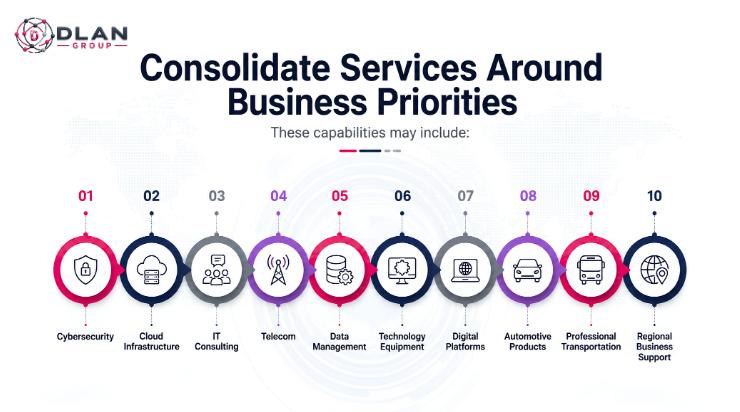
Consolidate Services Around Business Priorities

Vendor consolidation should not begin with the goal of reaching the lowest possible supplier count.

It should begin by identifying the capabilities the organization needs to grow and operate effectively.

These capabilities may include:

  • Cybersecurity
  • Cloud infrastructure
  • IT consulting
  • Telecom
  • Data management
  • Technology equipment
  • Digital platforms
  • Automotive products
  • Professional transportation
  • Regional business support

Reviewing the seven business services every growing company should consider can help leaders identify which services are strategically important and which vendor relationships may be duplicated.

The objective is to simplify management without reducing service quality or specialist capability.

Use a Connected Business Ecosystem

A connected ecosystem can support vendor consolidation without forcing every requirement into one general service.

The DLAN Group portfolio brings together DLAN AI, CyberHelm AI, GTSS Hub US, GTSS Hub Global, Minnesota Computers, APG OEM, GCS Transfer, DLAN Pakistan, and DLAN US.

Together, these businesses cover areas such as intelligent digital solutions, automation, cybersecurity, technology infrastructure, regional business services, automotive products, and professional transportation.

Clients can access specialized capabilities while benefiting from a broader group structure.

This reduces the need to begin a completely separate provider search whenever a related operational requirement appears.

It also supports the kind of comprehensive business assistance described in Beyond Support: The Services That Keep Ambitious Businesses Running Smoothly.

Vendor Consolidation Does Not Mean Eliminating Every Specialist

Not every vendor relationship should be removed.

Some services require highly specialized expertise, local licensing, unique products, or independent oversight.

Businesses should avoid consolidating purely to reach a lower vendor count.

A vendor should remain separate when:

  • Independent review is required
  • The service involves specialized regulation
  • The vendor offers unique expertise
  • Concentration would create excessive risk
  • The provider consistently delivers strong value
  • A backup supplier is operationally necessary
  • Local support is essential

The objective is to remove unnecessary complexity, not useful specialization.

A balanced vendor strategy combines consolidation with appropriate supplier diversity.

How to Build a Vendor Consolidation Strategy

1. Create a Complete Vendor Inventory

List every provider, service, contract owner, cost, renewal date, system access level, and business dependency.

Include vendors selected by individual departments, not only those managed by procurement or IT.

2. Group Related Services

Organize providers into categories such as:

  • Technology
  • Cybersecurity
  • Cloud
  • Telecom
  • Hardware
  • Software
  • Transportation
  • Automotive
  • Marketing
  • Professional services

This makes duplication easier to identify.

3. Identify Overlap

Look for multiple providers delivering similar services.

Examples may include several cloud platforms, duplicate communication tools, multiple cybersecurity products, or separate support providers for closely connected systems.

4. Assess Performance and Risk

Review service quality, cost, security, responsiveness, expertise, and business importance.

The lowest-priced provider may not always offer the lowest total cost.

5. Select Strategic Partners

Choose providers that can support current needs while adapting to future growth.

A strategic provider should understand the business, communicate clearly, maintain documentation, and coordinate effectively with other partners.

6. Plan the Transition

Vendor changes should be carefully managed.

The transition plan should cover:

  • Data transfer
  • Account removal
  • Contract termination
  • System migration
  • Employee communication
  • Service continuity
  • Security access
  • Documentation
  • Backup arrangements

Avoid ending one service before the replacement has been tested.

7. Review the New Structure

After consolidation, measure whether the change has improved:

  • Cost control
  • Response time
  • Accountability
  • Security
  • User experience
  • Reporting
  • Service availability
  • Operational efficiency

Vendor consolidation should create measurable improvement rather than simply reducing the number of supplier names.

Questions to Ask a Potential Strategic Provider

Before consolidating services with a provider, ask:

  • Which services can you manage directly?
  • Which services involve subcontractors?
  • How do you protect customer and business data?
  • What support and escalation processes are available?
  • Can your services scale across multiple locations?
  • How do you measure performance?
  • What happens during an outage or security incident?
  • Can you integrate with existing platforms?
  • How will the transition be managed?
  • What ongoing support is included?

The provider’s responses should be clear, documented, and aligned with the company’s operational requirements.

Conclusion

Vendor consolidation can help growing companies reduce unnecessary cost, improve accountability, strengthen security, standardize service quality, and simplify operational management.

The goal is not to depend blindly on one provider. It is to create a controlled network of strategic partners that can support related business needs without adding unnecessary complexity.

A successful consolidation strategy begins with understanding the current vendor environment, identifying overlap, assessing performance, and selecting providers based on long-term business value.

Companies that simplify their vendor structure can spend less time coordinating suppliers and more time improving operations, customer service, innovation, and growth.

You can explore the group’s expertise, service approach, and commitment to secure and scalable solutions through the About DLAN Group page.

Simplify Your Business Operations With DLAN Group

Managing disconnected technology, cybersecurity, infrastructure, communication, automotive, transportation, and regional service providers can consume valuable time and create avoidable risks.

DLAN Group offers access to a connected ecosystem of specialist businesses designed to support different parts of modern operations. Its team can help you evaluate your current vendor structure, identify overlapping services, uncover operational gaps, and develop a more coordinated support model.

Whether you need to simplify technology management, strengthen cybersecurity, improve infrastructure, support business mobility, or access regional expertise, DLAN Group can help connect the right capabilities around your objectives.

Contact DLAN Group today to request a consultation, discuss your current vendor challenges, and discover how a more connected service ecosystem can reduce complexity and support long-term growth.

Frequently Asked Questions

What is vendor consolidation?

Vendor consolidation is the process of reducing the number of providers used by a company and moving related services to fewer strategic partners.

What are the main benefits of vendor consolidation?

The main benefits include lower management costs, clearer accountability, stronger security, easier reporting, improved integration, and more consistent service quality.

Is it risky to use fewer vendors?

It can create concentration risk if consolidation is poorly planned. Businesses should maintain appropriate backup arrangements and avoid placing every critical operation with one provider without proper safeguards.

How can vendor consolidation improve cybersecurity?

It reduces the number of external access relationships, platforms, accounts, and security processes that the business must monitor.

Which vendors should be consolidated first?

Businesses should first review vendors offering duplicate services, underused tools, overlapping platforms, or services closely connected to the same operational process.

How often should vendor relationships be reviewed?

Vendor relationships should generally be reviewed annually and before contract renewals, major technology changes, regional expansion, or business restructuring.

The New Standard for Business Operations: Connected Services Built Around Performance

Business performance is no longer measured only by how much a company sells or how many customers it serves. Today, performance depends on how well the business operates from the inside. Secure systems, reliable communication, smart technology, flexible infrastructure, useful data, professional mobility, and digital platforms all play a role in how smoothly a company works every day.

A business may have strong goals, talented people, and a growing customer base, but if its services are not connected properly, performance can suffer. Teams may face delays, customers may wait longer, systems may become harder to manage, and leaders may struggle to make confident decisions.

This is why modern companies need connected business services. They need support that does not work in separate parts, but as one complete structure built around performance, reliability, and long-term growth.

DLAN Group offers this kind of service ecosystem for companies that want to improve how they operate, communicate, protect information, and serve customers.

Operational Performance Starts With Strong Internal Systems

Every successful customer experience begins with strong internal operations. When systems are organized, teams work faster. When communication is clear, projects move smoothly. When data is protected, customers feel safer. When technology is planned properly, the business avoids unnecessary disruption.

Many companies only look at operations when something goes wrong. They upgrade systems after delays happen. They improve security after risks appear. They review communication after customers complain. But a stronger business takes a proactive approach.

Connected services help companies build the right structure before problems become serious. Cybersecurity, cloud solutions, telecom, IT consulting, GRC, data analytics, AI, mobility services, and digital platforms all support different areas of performance. When these services work together, the business becomes easier to manage and better prepared for growth.

Cybersecurity Creates a Safer Operating Environment

Cybersecurity is one of the most important parts of modern operations. A company cannot perform well if its data, systems, users, and networks are exposed to risk. Security problems can interrupt daily work, affect customer trust, and create serious financial or reputational damage.

Strong cybersecurity helps protect the digital side of the business. It supports safer communication, stronger access control, better system protection, and more responsible data handling. For companies that manage customer records, employee information, financial data, or cloud-based systems, this protection is essential.

Cybersecurity also gives teams more confidence. When employees know their systems are secure, they can focus on serving customers and completing work instead of worrying about hidden risks.

In a performance-focused business, security is not separate from operations. It is part of the foundation.

Cloud Solutions Improve Flexibility and Speed

Modern businesses need flexibility. Teams may work from different locations, customers may expect faster service, and companies may need to scale without heavy infrastructure limitations. Cloud solutions help make this possible.

Cloud technology allows businesses to access data, tools, platforms, and systems more easily. It supports remote work, improves collaboration, and helps companies manage growth with less pressure on physical infrastructure.

A strong cloud setup can also improve business continuity. When files, platforms, and systems are easier to access and manage, teams can keep working with fewer delays. This creates a smoother workflow and better customer service.

Cloud solutions are not only about moving data online. They are about making the business faster, lighter, and more adaptable.

Telecom Services Strengthen Everyday Communication

Communication is one of the most visible parts of business performance. If customers cannot reach the company easily, trust can decrease. If teams cannot communicate clearly, mistakes can increase. If departments are not connected, operations can slow down.

Telecom services help businesses keep conversations smooth and professional. They support customer calls, internal coordination, remote team communication, and multi-location connectivity.

Good communication improves response time and keeps people aligned. It helps sales teams follow up faster, support teams answer questions more clearly, and managers coordinate work with better control.

A strong telecom system not only connects people. It supports the rhythm of the entire business.

IT Consulting Brings Direction to Technology Decisions

Technology can either support growth or create confusion. Many companies invest in tools, platforms, and systems without a clear plan. Over time, this can lead to wasted money, disconnected workflows, and unnecessary technical problems.

IT consulting helps businesses make better decisions. It provides guidance on what needs improvement, which systems should be upgraded, how cloud solutions should be used, where security needs attention, and how technology can support long-term goals.

This service is especially valuable for growing companies because it helps them avoid random decisions. Instead of reacting to problems, the business can follow a clear technology roadmap.

When IT decisions are planned properly, technology becomes a performance driver instead of a daily challenge.

Data Analytics Turns Activity Into Insight

Every business produces data, but not every business uses it well. Customer activity, sales performance, website behavior, service requests, communication patterns, and operational reports all contain useful information.

Data analytics helps turn this information into clear insight. It allows leaders to understand what is working, what needs improvement, and where the business should focus next.

Without analytics, companies often depend on assumptions. With analytics, they can make decisions based on facts. This helps improve customer service, marketing, operations, team performance, and business planning.

A company that understands its data can respond faster, plan better, and perform with more confidence.

GRC Helps Businesses Stay Controlled and Responsible

As companies grow, they need more structure. More customers, more data, more systems, and more employees create more responsibility. Without proper control, growth can become difficult to manage.

Governance, Risk, and Compliance support helps businesses operate with better discipline. It supports risk management, internal standards, compliance awareness, and responsible decision-making.

GRC is important because performance is not only about speed. A business also needs control, safety, and accountability. When internal processes are clear, teams know what to follow, leaders can manage risk better, and the company can grow with fewer avoidable problems.

Responsible operations create stronger long-term performance.

AI and Automation Improve Productivity

AI and automation are becoming practical tools for everyday business improvement. They help reduce repetitive work, speed up processes, improve reporting, and support better decision-making.

Many teams lose time on manual tasks that can be automated. When routine work is reduced, employees can focus on higher-value responsibilities such as customer support, strategy, service quality, and relationship building.

AI can also help businesses understand patterns, process information faster, and improve workflow consistency. This creates a more efficient work environment and helps teams manage increasing demand without unnecessary pressure.

For modern companies, AI is not just a future trend. It is a useful service for improving productivity now.

Chauffeur Services Add Professional Mobility Support

Business performance is not limited to digital systems. Professional travel and mobility also affect how a company operates and presents itself.

Chauffeur services support executives, corporate guests, airport transfers, meetings, VIP travel, and scheduled business movement. A reliable travel experience helps reduce stress, protect schedules, and create a professional impression.

For companies that regularly manage client visits, executive movement, or important meetings, dependable chauffeur support can add real value. It shows attention to detail and helps important business moments run smoothly.

Mobility services support the physical side of business performance.

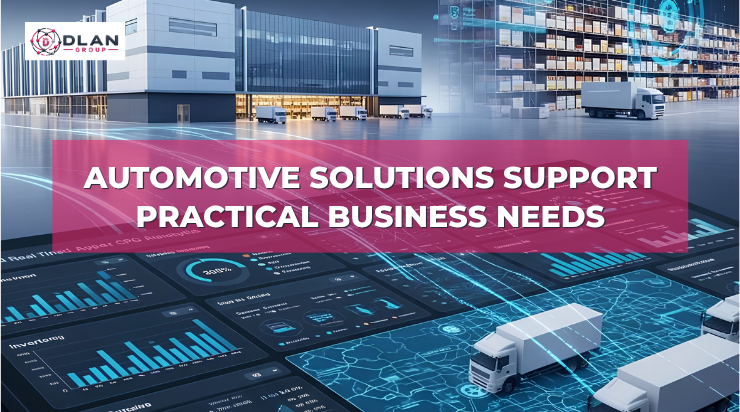
Automotive Solutions Support Practical Business Needs

Automotive solutions also play a role in operational reliability. Many businesses and professionals depend on mobility, vehicle performance, and transport-related support to keep schedules and services moving.

Reliable automotive support can reduce delays, improve convenience, and support smoother operations. It adds another layer of practical service value for companies that need dependable mobility and performance.

When automotive solutions are part of a wider service ecosystem, they help connect digital efficiency with real-world operational needs.

Digital Platforms Support Visibility and Growth

A company’s digital presence is now part of its operational performance. Customers often visit a website, service page, or digital platform before making contact. If the platform is confusing, slow, or unclear, the customer experience can suffer before a conversation even begins.

Digital platforms help businesses present services, improve online visibility, support customer engagement, and manage digital growth. When these platforms are supported by cybersecurity, cloud systems, AI, and consulting, they become stronger and more useful.

A well-managed digital platform helps the business look professional, stay accessible, and create a smoother path for customers to take action.

Why Connected Services Perform Better Than Separate Solutions

Separate services can solve individual problems, but connected services improve the whole business. When cybersecurity, cloud solutions, telecom, IT consulting, data analytics, GRC, AI, mobility, automotive support, and digital platforms work together, the company becomes more organized.

This approach reduces confusion and helps every part of the business support the same goal: better performance.

DLAN Group brings these service areas together to help companies strengthen their operations from multiple angles. The value is not only in each service individually, but in how these services support the business as a complete system.

Conclusion

The new standard for business operations is not about using more tools or hiring more providers. It is about building a connected service structure that improves performance, protects data, supports communication, strengthens decision-making, and helps the company grow with confidence.

Cybersecurity creates protection. Cloud solutions create flexibility. Telecom services improve communication. IT consulting adds direction. Data analytics creates clarity. GRC supports responsibility. AI improves productivity. Chauffeur and automotive services support mobility. Digital platforms strengthen online growth.

Together, these services create a stronger operating model for modern companies.

For businesses that want to work better, serve customers faster, and prepare for long-term growth, connected business services are no longer optional. They are the foundation of better performance.

FAQs

What are connected business services?

Connected business services are different support areas, such as cybersecurity, cloud solutions, telecom, IT consulting, AI, data analytics, mobility services, and digital platforms, working together to improve business performance.

Why do companies need connected services?

Companies need connected services because separate systems can create delays and confusion. A connected approach helps improve communication, security, productivity, and customer experience.

How does cybersecurity support business performance?

Cybersecurity protects data, users, systems, and networks, helping the business operate safely and avoid disruptions.

Why are cloud solutions important for operations?

Cloud solutions improve flexibility, remote access, collaboration, storage, scalability, and business continuity.

How can AI improve productivity?

AI can automate repetitive work, process information faster, support decision-making, and help teams focus on more valuable tasks.

Beyond Support: The Services That Keep Ambitious Businesses Running Smoothly

A successful business is not only built on great ideas. It is built on the systems, services, and support working quietly behind the scenes. Customers may only see the final result, but behind every smooth operation, there is secure technology, reliable communication, smart planning, professional mobility, and digital tools that help teams perform better every day.

As businesses grow, their needs become more serious. A small technical issue can delay work. Poor communication can affect customer experience. Weak cybersecurity can put sensitive data at risk. Outdated systems can slow down teams. Lack of planning can turn technology into a daily problem instead of a growth tool.

This is why companies now need more than basic support. They need a service ecosystem that keeps the business protected, organized, connected, and ready for the next stage.

DLAN Group brings these services together through a practical model designed for businesses that want stronger operations, smarter technology, and dependable support.

The Real Work Happens Behind the Scenes

Every growing company reaches a stage where simple solutions are no longer enough. The business starts handling more clients, more data, more communication, more tools, and more responsibilities. What once worked for a small team may not work when the company begins to scale.

This is where the right services make a major difference.

Cybersecurity protects the business from digital risk. Cloud solutions give teams more flexibility. Telecom services keep communication smooth. IT consulting brings direction to technology decisions. Data analytics helps leaders understand performance. AI and automation reduce slow manual work. Chauffeur and automotive services support professional movement. Digital platforms help the business grow online.

Together, these services create the support structure a company needs to operate without unnecessary pressure.

Cybersecurity That Protects More Than Data

Cybersecurity is often seen as a technical service, but its real value is much bigger. It protects trust, reputation, customer confidence, business continuity, and daily operations.

Every company handles sensitive information in some form. It may be customer records, financial details, employee data, login credentials, internal documents, or cloud-based files. If this information is not protected properly, the damage can go far beyond a system issue.

Strong cybersecurity helps businesses reduce risk before it becomes a serious problem. It protects networks, users, devices, cloud systems, and digital infrastructure. More importantly, it allows business owners and teams to work with confidence.

For any company that wants to grow in a digital world, cybersecurity is not an extra service. It is a business necessity.

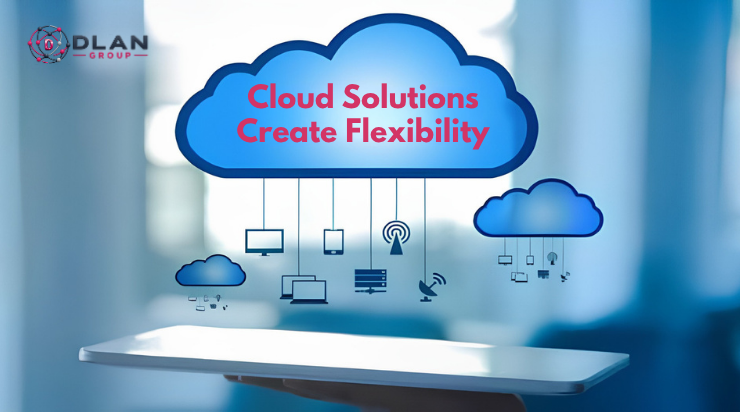
Cloud Solutions That Create More Freedom

A business should not feel limited by its own systems. Teams need access to files, tools, platforms, and information without being tied to one location or outdated infrastructure.

Cloud solutions make this possible.

With the right cloud setup, businesses can improve flexibility, collaboration, storage, backup, and remote access. Teams can work more efficiently, managers can handle operations with better control, and the company can scale without depending on heavy physical systems.

Cloud services are especially useful for businesses that are growing, hiring remote teams, managing multiple locations, or planning digital transformation. They make the business lighter, faster, and more adaptable.

A good cloud strategy does not only move data online. It gives the business more room to grow.

Telecom Services That Keep Conversations Moving

Business communication must be fast, clear, and reliable. A delayed response can affect a customer relationship. A missed update can slow down a project. Poor connectivity can create frustration across teams.

Telecom services support the communication flow of a business. They help teams stay connected, customers receive timely responses, and departments work with better coordination.

For companies with remote employees, customer support teams, sales departments, or multiple locations, reliable telecom support becomes even more important. Communication is not just part of operations. It is part of the customer experience.

When communication works well, the whole business feels more organized.

IT Consulting That Adds Clarity

Many businesses use technology, but not every business uses it wisely. Some companies keep old systems for too long. Others spend money on tools they do not really need. Some move to new platforms without a proper plan and then struggle with confusion later.

IT consulting helps remove that confusion.

A good consulting approach reviews the current situation, identifies weak points, and creates a clear path forward. It helps the business understand what to improve, what to avoid, and where technology can create real value.

This service is important because technology decisions affect cost, productivity, security, customer experience, and future growth. With the right guidance, businesses can stop making random decisions and start building a smarter digital foundation.

Data Analytics and GRC for Better Control

A business cannot improve what it does not understand. This is why data analytics has become an important part of business growth.

Every company creates information through sales, customer activity, website performance, service requests, team output, and daily operations. Data analytics helps turn that information into useful insight. It shows what is working, where problems exist, and which opportunities deserve attention.

Governance, risk, and compliance support adds another layer of control. As businesses grow, they need better processes, clearer standards, stronger risk awareness, and responsible decision-making. GRC helps companies stay organized and reduce avoidable risks.

Together, data analytics and GRC help leaders make smarter decisions with more confidence.

AI and Automation That Reduce Slow Work

AI is no longer only a future idea. It is already helping businesses save time, improve workflows, and work more efficiently.

Many teams spend hours on repetitive tasks that can be simplified through automation. AI can support customer service, reporting, data processing, task management, internal workflows, and decision-making.

The purpose of AI is not to replace the human side of business. It is to remove unnecessary manual pressure so people can focus on better work. When used properly, automation helps teams become faster, more accurate, and more productive.

For companies that want to stay competitive, AI and automation are becoming practical tools for everyday improvement.

Chauffeur Services for Professional Travel

Business movement also matters. Meetings, airport transfers, executive travel, guest transportation, and scheduled rides all require reliability and professionalism.

Chauffeur services provide a travel experience that is comfortable, punctual, and well-managed. For executives, corporate guests, and business clients, professional transportation creates a better impression and reduces unnecessary stress.

A smooth travel experience reflects well on the business. It shows care, planning, and attention to detail.

This service adds value beyond technology by supporting the real-world movement of people, clients, and business schedules.

Automotive Solutions for Practical Mobility Support

Automotive solutions play an important role in keeping mobility reliable. For businesses and individuals, dependable automotive support can improve convenience, performance, and operational efficiency.

Mobility is part of many business activities. Whether it connects to logistics, travel, customer service, or daily operations, reliable automotive support helps reduce delays and improve confidence.

This service area strengthens the overall ecosystem by supporting both digital and physical business needs.

Digital Platforms That Support Online Growth

A business also needs strong digital platforms to grow in today’s market. Online presence, service access, automation, customer engagement, and digital visibility all depend on the right platforms.

A well-built digital platform can help a company present its services clearly, connect with customers, and manage online growth more effectively. When digital platforms are supported by cybersecurity, cloud technology, AI, and consulting, they become even more powerful.

For companies that want to expand online, digital platforms are not just websites or tools. They are part of the business growth engine.

Why a Connected Service Ecosystem Matters

The strongest businesses are not built with scattered services. They are built with services that work together.

Cybersecurity protects the systems. Cloud solutions create flexibility. Telecom keeps communication active. IT consulting gives direction. Data analytics brings insight. GRC adds control. AI improves speed. Chauffeur and automotive services support mobility. Digital platforms create online reach.

When these services work as part of one ecosystem, the business becomes easier to manage and better prepared for growth.

DLAN Group supports this approach by offering services that help companies strengthen both their digital and operational foundation.

Conclusion

A growing business needs more than quick fixes. It needs reliable services that protect, support, connect, and improve daily operations.

Cybersecurity keeps the business safe. Cloud solutions create flexibility. Telecom services improve communication. IT consulting brings clarity. Data analytics and GRC support better control. AI and automation improve productivity. Chauffeur and automotive services support professional mobility. Digital platforms help the business grow online.

Together, these services create a stronger foundation for companies that want to move forward with confidence.

For businesses looking for dependable support across technology, mobility, and digital growth, DLAN Group offers a service ecosystem designed to keep operations running smoothly and ready for the future.

FAQs

What types of services support modern business growth?

Modern business growth is supported by services such as cybersecurity, cloud solutions, telecom, IT consulting, data analytics, GRC, AI automation, chauffeur services, automotive solutions, and digital platforms.

Why is cybersecurity important for businesses?

Cybersecurity protects sensitive data, networks, users, systems, customer information, and business operations from digital threats.

How do cloud solutions help companies?

Cloud solutions help companies improve flexibility, remote access, collaboration, data storage, backup, and scalability.

Why do businesses need IT consulting?

IT consulting helps businesses make smarter technology decisions, improve systems, reduce risks, and plan for long-term growth.

How can AI and automation improve business performance?

AI and automation reduce manual work, improve workflows, support faster decisions, and help teams focus on more valuable tasks.

7 Business Services Every Growing Company Should Invest In

Growth is exciting for any business, but growth also brings challenges. As companies expand, operations become more complex, communication becomes harder to manage, customer expectations increase, and security risks continue to rise.

Many businesses focus only on increasing sales or hiring more employees, but sustainable growth depends on having the right systems and services in place. Without strong support structures, even fast-growing businesses can face delays, inefficiencies, and operational problems.

Modern organizations are moving beyond traditional methods and investing in services that improve performance, strengthen operations, and create long-term value. Companies today are realizing that growth is not just about increasing revenue. It is also about creating systems that support employees, improve customer experiences, and help organizations remain efficient as they scale.

Businesses that invest in the right support services create stronger foundations and become better prepared for future opportunities and challenges.

1. Cybersecurity Is No Longer Optional

Businesses now manage large amounts of sensitive information every day. Customer details, financial records, internal communication, and operational data are often stored digitally.

Without proper protection, businesses become vulnerable to security threats that can impact operations and damage customer trust.

Strong cybersecurity solutions help organizations create safer environments while reducing risks and ensuring business continuity.

Businesses that prioritize security protect not only their systems but also their reputation.

Cybersecurity has become important because a single security issue can create financial losses, operational delays, and long-term damage to customer confidence. As digital systems continue growing, organizations must build stronger security measures that protect every aspect of their business environment.

2. Cloud Solutions Create Flexibility

Traditional systems can often limit business growth because they require large infrastructure investments and can become difficult to manage over time.

Cloud solutions give businesses more flexibility by allowing teams to access systems and information from different locations.

Cloud environments also support collaboration and make it easier for organizations to scale as operations expand.

Businesses can grow without constantly worrying about technology limitations.

Cloud services also help companies adapt quickly when business requirements change. Organizations can increase resources when needed and reduce them during slower periods. This flexibility allows businesses to operate more efficiently while maintaining better control over infrastructure and costs.

3. Communication Systems Keep Teams Connected

Good communication affects every part of an organization.

As businesses expand across locations and departments, maintaining seamless communication becomes increasingly important.

Reliable telecom services help businesses improve internal collaboration and maintain stronger relationships with customers and partners.

Strong communication systems often lead to stronger business performance.

Communication also affects productivity and employee engagement. When teams can communicate clearly, projects move faster, and decision-making becomes easier. Businesses that invest in strong communication systems often experience smoother workflows and fewer operational interruptions.

4. Technology Needs Direction

Adopting new technology without planning can create confusion and unnecessary expenses.

Many businesses invest in systems because they appear useful without understanding how they fit into long-term goals.

Professional IT consulting helps organizations make smarter decisions by aligning technology with business requirements and future plans.

A clear strategy helps businesses avoid mistakes and improve overall efficiency.

Technology should solve problems rather than create additional complexity. Businesses that develop long-term technology strategies often gain better results because they understand where they want to go and what systems can help them achieve those goals.

5. Professional Transportation Improves Business Experience

Business operations are not limited to office environments.

Executives travel frequently for meetings, conferences, and client interactions. Reliable transportation plays an important role in maintaining professional experiences.

Premium transportation services through GCS Transfer help businesses provide safe, reliable, and comfortable travel experiences.

Professional transportation also creates stronger impressions for clients and business partners.

Reliable travel services reduce stress and improve convenience for professionals who manage busy schedules. Professional transportation can also strengthen business relationships because client experiences often influence how organizations are perceived.

6. Automotive Solutions Support Daily Operations

Businesses that depend on transportation require reliable products and solutions that improve performance and reduce operational disruptions.

Through the Automotive Parts Group (APG) organizations can access automotive products designed for durability and efficiency.

Reliable automotive systems contribute directly to smoother operations and improved productivity.

Vehicle performance can influence business efficiency, especially for organizations that rely on logistics, transportation, or operational fleets. Dependable automotive solutions help businesses reduce downtime and maintain consistent performance.

7. Integrated Services Create Better Results

One of the biggest changes in modern business operations is the move toward connected services.

Organizations are realizing that individual systems often create gaps in efficiency. Businesses now prefer services that work together rather than separately.

When communication systems, technology solutions, security services, and operational support become part of one ecosystem, businesses often experience stronger performance and better long-term growth.

Integrated services allow companies to simplify operations and reduce management challenges. Instead of handling disconnected systems, organizations can focus on growth while different services work together to support business objectives.

Final Thoughts

Business growth is not simply about expanding operations. It is about creating strong systems that support every stage of growth.

Organizations that invest in secure technology, reliable communication, operational support, and connected services build stronger foundations for long-term success.

The companies that grow successfully are often the ones that prepare for the future before they need it. Businesses that create strong support structures today position themselves for greater efficiency, stronger performance, and sustainable growth tomorrow.

The Future of Business Services: Why Companies Need More Than Just Technology in 2026

The business world is evolving faster than ever. Companies are no longer searching for single solutions to solve isolated problems. Modern organizations need complete ecosystems that support growth, strengthen security, improve communication, and create smoother experiences across every part of the business.

Technology has changed how businesses operate, but technology alone is no longer enough. Today, organizations are expected to adapt quickly, make smarter decisions, protect digital assets, and maintain operational efficiency while customer expectations continue to rise.

As businesses continue moving toward digital environments, they face challenges from multiple directions at once. Security risks are increasing, operations are becoming more complex, and businesses need systems that can grow alongside them. This shift is changing how companies think about services and long-term business strategies.

Why Traditional Business Models Are Losing Their Impact

For years, businesses relied on different providers for different needs. One company handled communication systems, another managed security, while separate vendors looked after consulting, transportation, or operational support.

While this approach worked in the past, it often created disconnected systems that were difficult to manage. As organizations expanded, these gaps became larger and started affecting productivity, efficiency, and decision-making.

Modern businesses now want connected services that work together under one ecosystem. Instead of managing multiple independent systems, organizations prefer solutions that improve collaboration and create smoother operations.

This approach reduces complexity and allows businesses to focus on growth instead of managing operational challenges.

The Rise of Connected Business Services

One of the biggest shifts in today’s market is the move toward connected services.

Businesses are no longer investing in standalone products. They are investing in systems designed to support each other and improve the overall business environment.

When cybersecurity solutions work alongside cloud infrastructure, communication systems, business consulting, and operational support, organizations become more productive and efficient.

Connected business services create stronger foundations for growth while improving flexibility and performance.

Why Cybersecurity Is Now a Business Priority

Cybersecurity has moved far beyond being an IT responsibility.

Almost every business today stores important information digitally, including customer records, financial information, internal communications, and operational data. As technology dependence increases, businesses become more exposed to risks.

Security incidents do not only affect systems. They can impact reputation, customer trust, and daily business operations.

Strong cybersecurity solutions help businesses create secure environments where sensitive information remains protected while operations continue without interruption.

Organizations that prioritize security create stronger foundations for long-term success.

Cloud Solutions Are Reshaping Business Operations

Cloud technology has transformed the way businesses manage daily operations.

Instead of relying entirely on traditional systems, companies are moving toward flexible cloud environments that support collaboration, accessibility, and growth.

Cloud services allow organizations to adapt quickly without requiring major infrastructure investments. Teams can access information from different locations, work more efficiently, and respond faster to changing business demands.

As businesses continue to scale, flexibility becomes increasingly important, making cloud technology a key part of modern operations.

How Telecom Services Support Business Growth

Communication remains one of the most important elements of successful organizations.

As businesses expand across multiple locations and remote work becomes increasingly common, reliable communication systems are critical for maintaining efficiency.

Strong telecom solutions help organizations stay connected while improving collaboration between teams, clients, and business partners.

Reliable communication systems create better experiences internally and externally, helping organizations operate without unnecessary delays.

Why IT Consulting Matters More Than Ever

Technology investments influence almost every business decision today.

However, adopting new systems without proper planning can create unnecessary costs and inefficiencies.

Professional IT consulting helps organizations make smarter technology decisions by identifying business requirements, improving processes, and creating long-term strategies that align with company goals.

Businesses that combine technology with strategic planning often experience stronger performance and sustainable growth.

Why Professional Mobility Services Continue to Grow

Business operations extend beyond digital systems and office environments.

Professional transportation services continue to play an important role in supporting executives, clients, and corporate operations.

Premium chauffeur services through GCS Transfer provide reliable transportation experiences focused on comfort, professionalism, and convenience.

Reliable mobility services help businesses maintain efficiency while improving the experience for clients and teams.

Automotive Solutions Are Supporting Smarter Operations

Modern automotive solutions are no longer limited to basic maintenance and replacement parts.

Organizations that rely on transportation and vehicle operations require dependable products that improve performance and reduce operational disruptions.

Through Automotive Parts Group (APG) businesses gain access to high-quality automotive solutions designed for long-term performance and reliability.

Reliable automotive systems contribute directly to smoother business operations and improved productivity.

Businesses Need Ecosystems, Not Individual Services

The future of business is not simply about adopting more technology.

Success increasingly depends on creating systems where communication, security, consulting, mobility, and operational services work together.

Organizations that build connected ecosystems position themselves for stronger growth, greater efficiency, and long-term success.

The companies leading tomorrow will not necessarily be those with the most tools. They will be the ones with the smartest and most connected systems.

Final Thoughts

The future belongs to organizations that can adapt, innovate, and operate intelligently.

Businesses today require more than standalone services. They need complete solutions that support every part of their operations while creating stronger foundations for growth.

Companies that invest in connected business ecosystems today are preparing themselves for tomorrow’s opportunities and challenges.

Empowering Businesses with Digital Innovation

DLAN Group offers a wide range of solutions that enable businesses to scale, secure their digital infrastructure, and enhance operational efficiency. From cybersecurity and cloud services to telecom, IT consulting, automotive solutions, and premium chauffeur services, we provide everything your business needs to thrive in a digital-first world.

1. Advanced Cybersecurity Solutions for Business Protection

In today’s interconnected world, the need for robust cybersecurity solutions is more critical than ever. Cyber threats continue to evolve, posing risks to sensitive data, operations, and infrastructure. DLAN Group delivers advanced cybersecurity services designed to safeguard your organization from evolving threats.

Key Benefits of DLAN’s Cybersecurity Solutions:

  • Real-Time Threat Detection: Proactively monitor and identify cyber threats to mitigate risks early.
  • Data Protection & Encryption: Safeguard business data with robust encryption and secure access control.
  • Compliance Support: Ensure regulatory compliance with standards like GDPR, HIPAA, and others.
  • Business Continuity: Implement disaster recovery and backup solutions to ensure uninterrupted operations.

2. Scalable Cloud Solutions for Business Growth

Cloud technology is essential for businesses seeking flexibility, scalability, and high performance. DLAN Group offers cloud solutions that ensure seamless operations while providing the security and performance your business demands.

Why DLAN’s Cloud Solutions Matter:

  • Scalable Infrastructure: Adapt your cloud resources based on your business needs for maximum efficiency.
  • Secure Data Management: Maintain data security in the cloud with enterprise-grade encryption and access control.
  • Optimized Performance: DLAN ensures cloud environments are configured for the best performance and reliability.
  • Seamless Collaboration: Cloud platforms foster real-time collaboration, boosting productivity across teams and departments.

3. Telecom Services for Seamless Communication

Effective communication is at the heart of every successful business. DLAN Group offers enterprise-grade telecom services designed to enhance communication and connectivity, whether for local teams or global operations.

DLAN’s Telecom Services Include:

  • Network Design & Implementation: Build and manage robust telecom networks for seamless communication.
  • Unified Communication Systems: Integrate voice, video, and messaging systems to improve team collaboration.
  • Global Connectivity: Offer reliable telecom services that enable communication with clients, partners, and teams worldwide.
  • Optimized Voice Solutions: Implement VoIP services for improved voice communication and cost savings.

4. Expert IT Consulting for Business Transformation

Digital transformation doesn’t happen by chance. It requires expert planning, strategic guidance, and the right technology solutions. DLAN Group’s IT consulting services offer businesses the knowledge and support to navigate their digital journey successfully.

How DLAN’s IT Consulting Helps Your Business:

  • Technology Roadmaps: Develop comprehensive IT strategies that align with your long-term business goals.
  • System Integration: Integrate various systems to streamline workflows and improve operational efficiency.
  • Digital Transformation: Enable businesses to innovate and adopt new technologies to remain competitive.
  • End-to-End Project Management: DLAN provides complete support for technology projects from planning to execution.

5. Premium Chauffeur Services — Powered by GCS Transfer

At DLAN Group, we understand the importance of premium services beyond technology. That’s why we partner with GCS Transfer to provide businesses with professional chauffeur services that ensure executives and clients travel comfortably, safely, and on time.

What GCS Transfer Offers:

  • Professional Chauffeurs: Experience comfort and safety with highly trained drivers.
  • Reliable & Timely Transport: Ensure executives and clients arrive on time for meetings and events.
  • Corporate Image Enhancement: Impress clients and guests with top-tier transportation services.
  • Comfort & Luxury: Luxury vehicles designed for comfort and convenience during business travel.

6. High-Performance Automotive Solutions — Automotive Parts Group

In addition to digital solutions, DLAN Group partners with Automotive Parts Group (APG) to provide high-quality automotive products and services. APG delivers durable, reliable automotive parts designed to keep your business fleet running smoothly and efficiently.

Why Choose APG for Automotive Needs:

  • Reliable Automotive Parts: Supply high-performance OEM and aftermarket parts for long-term reliability.
  • Fleet Management Solutions: Optimize your vehicle fleet’s performance, reduce costs, and enhance productivity.
  • Comprehensive Product Range: From tires to engine components, APG offers a wide range of automotive products designed for efficiency and performance.

7. Minnesota Computers: Empowering IT Infrastructure

At DLAN Group, we partner with Minnesota Computers to provide businesses with reliable, high-performance computing solutions tailored to their needs. Whether it’s for data centers, cloud computing, or local IT support, Minnesota Computers helps businesses manage large data sets, handle complex operations, and scale seamlessly.

🔗 Explore Minnesota Computers: https://www.dlan.ai/wp/

Why Choose Minnesota Computers:

  • High-Performance Hardware: Equip your business with powerful computing systems designed for demanding workloads.
  • Custom Solutions: Tailored IT systems that meet your specific business needs.
  • Reliable IT Support: Ensuring smooth operations with continuous monitoring and proactive maintenance.
  • Scalable Systems: Solutions that grow with your business and provide flexibility as your needs change.

8. GRC (Governance, Risk, and Compliance) Solutions

DLAN’s GRC solutions help businesses strengthen governance, manage risk, and ensure compliance with industry standards and regulations.

Why Choose DLAN’s GRC Solutions:

  • Risk Management: Identify, evaluate, and mitigate risks to protect your business.
  • Compliance: Ensure your organization meets all relevant regulations, including GDPR, HIPAA, and more.
  • Governance Frameworks: Build robust governance structures to improve organizational accountability and decision-making.

9. Data Analytics: Turning Data into Smarter Business Decisions

In the age of big data, businesses that can effectively analyze and use their data are positioned to succeed. DLAN Group offers data analytics services that help businesses turn raw data into actionable insights for improved decision-making and performance.

How Data Analytics Drives Business Growth:

  • Clear Insights: Transform complex data into simple, actionable insights for faster, smarter decision-making.
  • Predictive Analytics: Leverage historical data to forecast trends and optimize business strategies.
  • Performance Optimization: Make data-driven decisions that improve operational efficiency and business growth.

The DLAN Group Advantage

DLAN Group combines deep expertise across multiple sectors to provide businesses with comprehensive, secure, and scalable solutions. Our services span across cybersecurity, cloud solutions, telecom, IT consulting, automotive services, and more, ensuring that businesses can thrive in the digital age.

What Makes DLAN Stand Out:

  • Global Presence: Our team of over 100 experts supports businesses worldwide with a seamless experience.
  • Tailored Solutions: Every business is different. We provide custom solutions designed to meet the unique needs of each client.
  • 24/7 Support: We offer continuous support, ensuring your operations run smoothly no matter where you are.

Conclusion: Let DLAN Guide Your Digital Success

Whether you need advanced cybersecurity, cloud solutions, reliable telecom services, or high-performance automotive solutions, DLAN Group is your trusted partner for digital transformation. Partner with us to build secure, scalable, and intelligent solutions that enable your business to thrive.

Ready to transform your business? Contact DLAN Group today and explore how we can help you achieve long-term success.